So your manuscript is finished, or close to it, and now you’re staring down a mountain of Google results trying to work out how publishing on Amazon actually works. Most of what comes up is written for American authors, which is a problem, because the process looks a little different once you factor in Australian ISBNs, US tax withholding and currency conversion. None of that makes self-publishing from Australia harder exactly, but it does mean a lot of the advice floating around online quietly assumes details that don’t apply to you, and that’s where a lot of first time authors get stuck or make an avoidable mistake.
This guide walks through the entire Amazon KDP process from an Australian point of view, step by step, with current figures rather than numbers lifted from an older blog post written before the last royalty update. By the end, you’ll know exactly what to do and where a service like Melbourne Print and Publish fits in if you decide you’d rather hand off the technical side to people who do it every day.
Kindle Direct Publishing, usually just called KDP, is Amazon’s self-publishing platform. Anyone can create a free account, upload a manuscript, set a price, and have the book listed for sale on Amazon within a few days. There’s no gatekeeper deciding whether your manuscript gets a chance, and no waiting months to hear back from anyone before your book can go live. You keep full ownership of your work, and Amazon pays you a royalty on every sale.
What makes KDP genuinely appealing for a first time author is the lack of upfront cost and the speed of the whole process. There’s no stock to buy, no warehouse to rent, and no long wait between finishing your manuscript and having it available for readers to actually buy. The responsibility that normally sits with someone else in other publishing arrangements, editing, design, formatting, marketing, now sits with you, either handled personally or outsourced to people who specialise in each part.
Even with KDP available, plenty of authors still wonder whether getting a publisher involved at some stage would be worth it, whether that’s for credibility, distribution, or simply not wanting to manage every step alone. It’s a fair question, and working out whether you actually need a publisher for your particular book and goals is worth thinking through properly before you commit fully to the self-publishing route.
There’s also a middle ground worth knowing about, usually called hybrid publishing, where an author pays for professional publishing support but keeps more rights and a bigger royalty share than a full publishing deal would typically offer. It sits between doing absolutely everything yourself and handing the whole process over to someone else. If you’re weighing KDP against that option, it’s worth reading up on how hybrid publishing works in Australia before settling on a path, since the trade-offs between cost, control and support aren’t always obvious at first glance.
A lot of KDP guides jump straight to formatting and pricing, which assumes you’ve already got a polished, finished manuscript sitting ready to go. Plenty of people reading this won’t be at that point yet, so it’s worth pausing here first, because the quality of what you publish matters far more to your long term success than how quickly you get it live.
If you’re still at the idea stage, the most common reason people stall out isn’t lack of talent, it’s not knowing what to actually write about, or losing confidence in an idea halfway through because it felt too broad or too thin to sustain a full book. If that’s where you’re at, some practical ways to find things to write about can help break that stall before you lose momentum entirely and the project quietly dies in a drawer.
Not every author writes their own book from start to finish, and there’s no shame in that at all. Memoirs, business books and expert non-fiction titles are very often ghostwritten, with the credited author providing the knowledge, experience and story while a professional writer shapes it into a finished, readable manuscript. If you’ve got the ideas, the expertise or the lived experience but not the time or writing confidence to get it onto the page, working with a ghostwriting service is a legitimate and common path, not a shortcut that cheapens the finished book in any way.
If you’re writing a novel and you’re stuck, whether that’s plot structure, pacing, an ending that won’t come together, or simply finishing a draft you started years ago and never returned to, a fiction ghostwriting service can help turn a half finished idea into a complete, cohesive manuscript ready for the next stage of the process.
Non-fiction carries its own particular challenges, especially around structure, research accuracy and keeping a consistent voice across a longer piece of writing than most people are used to producing. A non fiction ghostwriting service specialises in turning scattered expertise, notes and ideas into a readable, well organised book rather than a loose collection of thoughts.
One small but surprisingly common issue in early manuscripts is inconsistent point of view, switching between first person and third person without really meaning to, which confuses readers and reads as a mistake rather than a deliberate stylistic choice. If you’re not entirely sure what first person point of view actually means in practice and how to stay consistent with it, it’s worth a quick read before you finalise your draft and move on to editing.
If you’re considering hiring help for any part of the writing process, rates genuinely vary a lot depending on book length, research requirements, genre and experience level, so rather than guessing at a figure, it’s worth reading through what ghostwriting a book actually involves in Australia before you commit to a budget, so you know what to expect from the process itself.
Most authors eventually publish in more than one format, since KDP lets you link an ebook and a paperback edition to the same product page at no extra cost. Here’s how the three main options compare for someone publishing from Australia.
Format | Typical Reader | Setup Cost | Royalty Style | Best For |
Kindle ebook | Reads on phone, tablet or Kindle device | Free to list | 35% or 70% of list price, minus a small delivery fee | Fiction, genre fiction, how-to guides, fast launches |
Paperback | Wants a physical copy to hold or gift | Free to list (print on demand, no stock to buy) | A set royalty rate minus the printing cost | Memoirs, children’s books, non-fiction readers who browse physical shelves |
Hardcover | Wants a premium, gift worthy edition | Free to list | Similar structure to paperback, printing cost is higher | Illustrated books, special editions, business books given as gifts |
Because KDP prints on demand, nothing gets physically printed until a customer actually buys it, so there’s no stock sitting in a garage, no warehouse fees, and no upfront printing bill hanging over your head before you’ve sold a single copy. That’s the real appeal of the platform for new authors who don’t want to gamble money on guessing how many copies might sell.
If your plan is to launch as a Kindle ebook first, it’s worth knowing that ebook writing has its own pacing and formatting considerations compared with print, particularly around chapter length, scene breaks and how text reflows across very different screen sizes, from a small phone to a full sized tablet. An ebook writing service can help shape a manuscript specifically with that reading experience in mind, rather than treating digital as an afterthought to a print-first draft.
Here’s the process in the order you’ll actually move through it, from a finished manuscript to a live listing.
KDP is a publishing platform, not an editing service. It won’t flag plot holes, inconsistent characters, pacing that drags, or clunky sentences. A professional editing service looks at structure, pacing, clarity and consistency before your book goes anywhere near a cover designer or formatter, and skipping this step is consistently the biggest reason self-published books attract poor reviews that have nothing to do with the actual quality of the story being told.
Editing and proofreading aren’t the same thing, and mixing them up is a common and genuinely costly mistake. Editing deals with structure, clarity and flow, while proofreading is the final pass that catches typos, punctuation errors and small formatting slips right before publication. A book proofreading service handles that last check, and if you want the distinction explained properly so you know which one your manuscript actually still needs, it’s worth reading up on editing versus proofreading before deciding what comes next.
If your book leans academic or research heavy, with citations, footnotes, references or a lot of technical terminology, a standard proofread isn’t always enough to catch every issue. An academic proofreading service is built specifically for that kind of manuscript, checking consistency in referencing style and terminology that a general proofreader might not be trained to catch.
This is where a lot of Australian authors get tripped up, since most ISBN advice online is written for a US audience and simply doesn’t apply the same way here. We’ll cover this properly in its own section below, because it genuinely deserves one.
Ebooks and print books are formatted in completely different ways. Ebooks need clean, consistent styling built from proper paragraph styles that reflow across screen sizes, while print books need correct trim size, margins, bleed and gutter space allowed for the spine. A book formatting service handles both formats properly, and getting this step wrong is one of the quickest ways to make an otherwise well written self-published book look amateurish the moment a reader opens it.
Your cover needs to work at full size on a print copy and as a tiny thumbnail on a phone screen, since that’s genuinely how most Amazon shoppers will first encounter it while scrolling. A book design service understands how to balance both requirements at once, and in a crowded genre, a well designed cover has a measurable effect on how many people actually click through to read your book description in the first place.
If your book relies heavily on illustrations, whether that’s a children’s picture book or an illustrated non-fiction title, standard cover design alone isn’t enough to cover what you need. A book illustration service handles interior artwork that needs to translate cleanly across both ebook and print formats without losing colour accuracy or resolution along the way.
Creating a KDP account is free and requires your legal name, address and a bank account for royalty payments to land in. As an Australian author, you’ll also complete a US tax interview inside KDP, because Amazon is a US company and is required by default to withhold US tax on royalties paid to anyone outside the US. Most Australian authors apply for an IRS Employer Identification Number through this same process, which, once approved, allows royalties to be paid under the Australia-US tax treaty rather than having a large portion withheld automatically on every sale. It’s a one-time setup step that takes a little patience, but it genuinely catches new authors off guard when their first royalty payment comes through smaller than expected simply because this step was skipped or rushed.
Once your files are ready, you’ll fill in your title, subtitle, author name, categories, keywords and book description inside the KDP dashboard. The description, often called the blurb, matters enormously, since it’s frequently the deciding factor between a browsing reader clicking buy or scrolling straight past your listing. If you’re not confident writing yours, it’s genuinely worth reading through how to write a book blurb before you finalise your listing, since a weak blurb can undercut even a genuinely excellent book. From there, set your price, choose your royalty option and hit publish. Review typically takes up to 72 hours before your book goes live for sale.
This is one of the most common questions Australian authors ask, and the honest answer depends on your format and your longer term plans for the book.
Kindle ebooks sold through KDP don’t need an ISBN at all. Amazon assigns its own internal identifier automatically, which is sufficient if the book will only ever exist as a Kindle ebook sold exclusively on Amazon.
Paperbacks and hardcovers are a different story entirely. KDP will give you a free ISBN if you don’t already have one, but that free ISBN lists Amazon’s own publishing imprint as the publisher on record, not your name or your own imprint, and it ties the paperback exclusively to Amazon’s print distribution network. If you ever want to sell through other retailers or a local bookshop, you’ll need your own ISBN rather than the free one Amazon provides.
In Australia, ISBNs are issued exclusively through Thorpe-Bowker, the official Australian ISBN agency, via MyIdentifiers.com.au. New publishers go through a one-off account setup step, after which individual ISBNs can be purchased, and buying a small block rather than a single ISBN tends to work out more sensible if you’re planning more than one book over the coming years.
Owning your own ISBN means you’re registered as the official publisher of record, which matters if you’re building an author brand or your own imprint across multiple titles over time, rather than having every book tagged to Amazon’s generic publishing arm with no distinct identity of its own.
Royalty rules have genuinely changed more than once over the past couple of years, so it’s worth checking any advice you read against current figures rather than relying on an older blog post that hasn’t been updated since the last change.
Format | Royalty Option | Current Rate | Conditions |
Kindle ebook | Low tier | 35% of list price | Available at any price point |
Kindle ebook | High tier | 70% of list price, minus a delivery fee | Available within a qualifying mid-range price band |
Paperback | Standard | 50% of list price, minus printing cost | Applies below a set list price threshold |
Paperback | Standard | 60% of list price, minus printing cost | Applies at or above that threshold |
Hardcover | Standard | Same structure as paperback | Printing cost is higher due to the binding |
The qualifying price band for the higher ebook tier was widened in mid-2026, the first change of its kind since KDP originally launched, so it’s worth checking the live figures on KDP’s own pricing page before you lock in a price, since pricing just outside the qualifying range can genuinely cut your earnings per sale without you realising it until the royalty report comes through. There’s also a small delivery fee on the higher ebook tier, calculated per megabyte of your converted file size, which barely registers for a text-only novel but adds up noticeably for an image-heavy ebook.
Printing cost for a paperback or hardcover depends on trim size, page count, ink choice and binding, so two books priced the same can earn quite different royalties depending on how they’re specified. Rather than estimating with made-up figures here, it’s worth reading a proper breakdown of how much book publishing actually costs in Australia, which covers the full picture beyond just KDP’s own printing fees, alongside running your specific book through Amazon’s own printing cost calculator before you settle on a final price.
A handful of issues show up again and again in manuscripts that come through for professional formatting, and they’re worth flagging before you attempt this yourself.
Inconsistent chapter styling. Each chapter heading should use the same font, size and spacing throughout the whole book, since readers notice inconsistency even without being able to name exactly what feels off about it.
Manual formatting instead of proper styles. Using repeated tab or space bar presses to create paragraph indents, rather than genuine paragraph styles, causes real chaos when the file converts to an ebook, where text needs to reflow cleanly across very different screen sizes.
Wrong trim size for the genre. A thriller formatted at an unusually large trim size looks and feels wrong to readers who are used to the smaller, standard paperback trim that genre fiction typically uses on bookshop shelves.
Images that break during conversion. High resolution images that look perfectly fine inside a Word document can blur, shift position or disappear entirely once converted for Kindle, a particular risk for illustrated non-fiction and children’s books specifically.
Missing or incomplete front matter. A missing title page or copyright page makes an otherwise well written book look rushed and unfinished, even when the actual content inside is genuinely strong.
There’s no single correct answer here, it genuinely depends on your skills, your available time and how much you personally value getting everything right on the first attempt rather than learning through trial and error.
DIY publishing works well if you’re already comfortable with formatting software, have a reasonable eye for design, and don’t mind a learning curve around ebook conversion quirks and print trim specifications. Plenty of genuinely successful independent authors handle every single step themselves, and there’s nothing wrong with that approach if you’ve got the time and patience for it.
Getting professional help makes more sense if you’d rather spend your limited time writing the next book instead, if your manuscript has a complex layout involving illustrations or tables, or if a previous DIY attempt didn’t turn out looking the way you pictured it in your head. A full publishing service can coordinate editing, design, formatting and printing as one connected process rather than a series of disconnected steps handled separately with no one tying it all together. It’s also worth getting a feel for the wider publishing landscape in Australia, including which publishing companies currently operate here, simply so you understand the full range of options available before deciding which path genuinely suits your particular book and your goals for it.
Publishing the book is genuinely only half the job. KDP is a platform, not a marketing engine, and the books that go on to sell well almost always have an author actively working to get them seen by the right readers.
A properly planned marketing approach covers categories and keyword selection, early reviews, a mailing list and promotional pricing, all working together as a coordinated effort rather than a handful of disconnected one-off actions. Rather than guessing what’s reasonable to spend, it’s worth reading through what hiring a book marketer actually involves in Australia before committing a budget to it.
Beyond Amazon itself, a lot of long term author success comes down to having a presence readers can find independently of any single platform’s algorithm. Building an author website gives you a home base for your mailing list, upcoming releases and a direct line to readers that isn’t controlled entirely by Amazon’s changing rules. A well made book trailer can also give a launch a genuine boost, particularly when shared across social media in the lead up to publication day to build some early momentum before the book even goes live.
KDP’s print on demand service is genuinely excellent for low risk, no upfront cost availability online. But it’s not always the right fit for every situation an author finds themselves in. Authors planning a local launch event, selling at markets or festivals, or wanting a higher quality print run with better paper stock and binding than standard print on demand offers, often find Amazon’s basic print options a little limited for that specific purpose. A dedicated book printing service can produce a proper local print run with faster turnaround, better quality control and no overseas shipping delays, which is exactly why many Australian authors end up using both options side by side, KDP for ongoing online availability, and a local printer for launch stock they can hold in hand before the big day.
Publishing a book on Amazon KDP from Australia really isn’t complicated once you understand the handful of places where the Australian experience differs from the generic, US-focused advice that dominates most online guides. Get the ISBN decision right through Thorpe-Bowker rather than assuming Amazon’s free option is always fine. Complete the US tax interview properly so you’re not losing a chunk of every royalty payment unnecessarily. Understand where the different royalty tiers actually sit before you set your price, rather than guessing and hoping. And treat editing, formatting and cover design as genuine investments in how your book is received, not optional extras to skip in the rush to hit publish.
None of this means you have to do every single step yourself. Some people genuinely enjoy learning the technical side and handling it all personally, and there’s a real sense of satisfaction in that. Others would rather spend their time and energy on the writing itself, and hand the publishing mechanics to people who already know the process inside and out. Both are completely valid approaches, and the right choice simply comes down to your own time, confidence and how much control you want to keep over each stage.
Whichever path you choose, Melbourne Print and Publish is there as a full-service option for Australian authors at any point in the process, whether that’s writing support, editing, formatting, cover design, illustration, printing or marketing once the book is live. You don’t need to use every service, and you don’t need to have it all figured out before reaching out. The goal, at the end of the day, is simply a finished book that looks and reads exactly the way you pictured it when you first sat down to write it, and that genuinely finds its way into the hands of readers who were always going to love it.
Create a free KDP account, format your manuscript for ebook or print, design a cover, decide whether you need your own ISBN, then upload your files and set your price. Review typically takes up to 72 hours before your book goes live for sale.
Not for a Kindle ebook, since Amazon assigns its own identifier automatically. For paperbacks or hardcovers, Amazon’s free ISBN works but lists Amazon as the publisher of record and ties your book to Amazon’s print network exclusively.
Listing a book on KDP itself is completely free. The expenses come from everything around the listing, such as editing, cover design, formatting and an ISBN if you choose to buy your own rather than use Amazon’s free one.
Ebooks earn either 35% or 70% of list price depending on your chosen pricing tier, with the higher tier available within a qualifying price range. Paperbacks and hardcovers earn 50% or 60% of list price, with Amazon’s printing cost deducted from that amount.
Yes. Australian authors publish and sell through KDP exactly the same way authors anywhere else do, with royalties paid in USD and US tax withholding managed through KDP’s tax interview process during account setup.
Review typically takes up to 72 hours after you hit publish, though it can occasionally take longer for print formats or books flagged for a manual content review.
Yes, and it’s genuinely recommended. KDP lets you link an ebook and paperback edition to the same product listing at no extra cost, so readers can choose their preferred format from one page.
A free KDP ISBN lists Amazon’s own imprint as the publisher and restricts the paperback to Amazon’s distribution network only. An ISBN you purchase through Thorpe-Bowker lists you or your own imprint as the publisher, allowing wider distribution through other retailers if you choose to pursue that later.
For most first time authors, yes, since it removes the upfront cost and waiting period that other publishing routes usually involve, and gives you full creative control along with a larger royalty percentage per sale. The trade-off is that all the editorial, design and marketing responsibility sits with you or whoever you choose to work alongside.
It’s not required by Amazon, but poorly formatted books are consistently one of the most common reasons self-published titles attract negative reviews that have nothing to do with the quality of the writing itself.


Learn the difference between your, you're, their, they're, and there with simple tips that help you avoid common grammar mistakes in everyday writing.
Understand tone in writing, from formal and playful to serious and sarcastic, and learn how the right tone can shape your reader’s response.
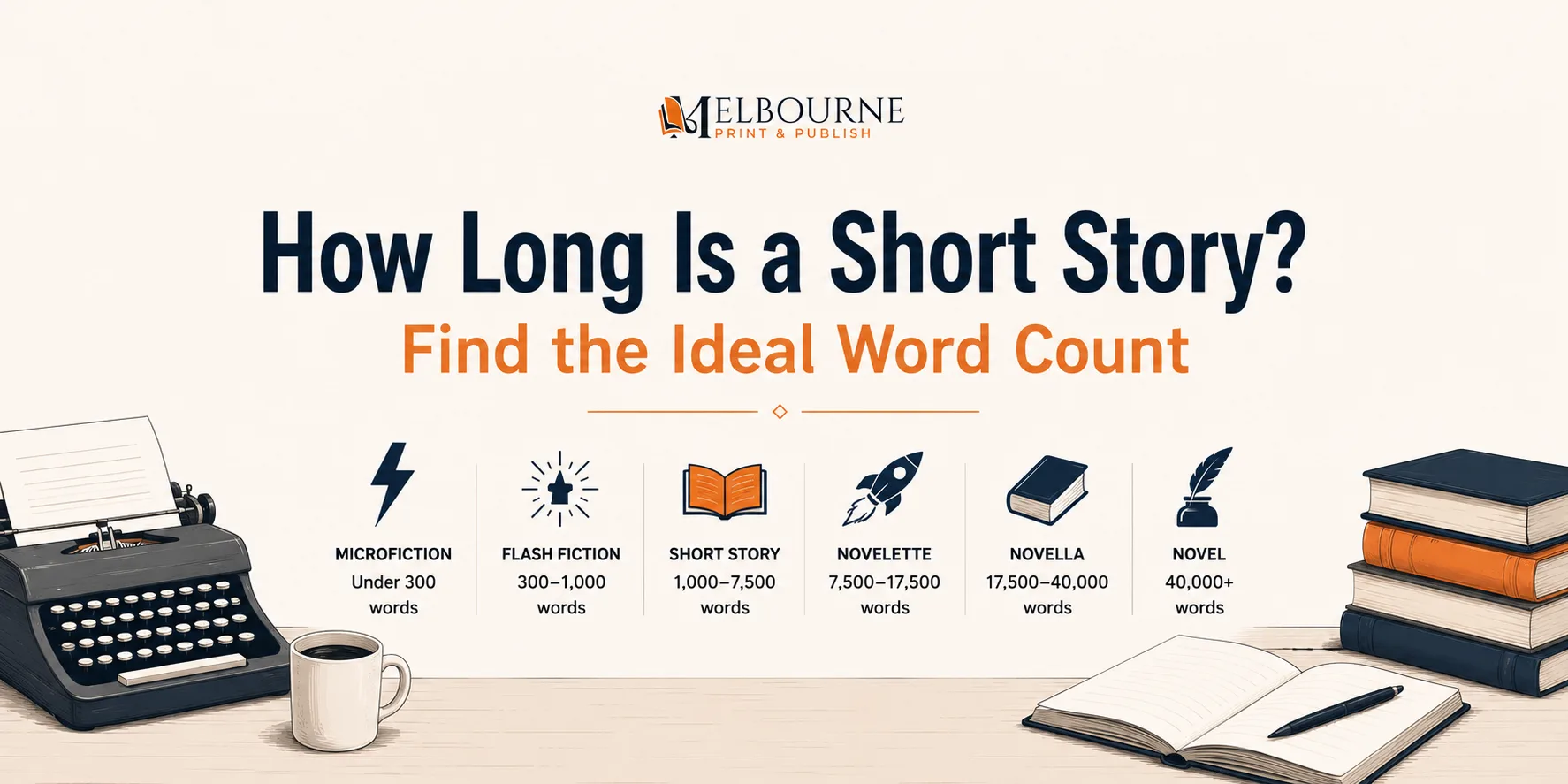
Not sure how many words your story needs? Learn the ideal length for flash fiction, short stories, novelettes, and novellas before sending it to a publisher.
Explore the 12 character archetypes, from Heroes and Rebels to Sages and Rulers. Discover their traits, motivations, flaws and how to make them memorable.