
A book publishing company in Australia can mean four quite different things: a traditional trade publisher who pays the author, a hybrid publisher who shares production costs with the author, a self-publishing services company the author pays to manage the process, or a DIY platform the author uses directly. Confusing the four is the biggest reason authors end up with the wrong outcome for their book.
Search "top book publishing companies in Australia," and you'll get a wall of results that mix all four meanings together with no signal of which is which. One page lists trade houses that take a tiny fraction of unsolicited submissions a year. The next ranks paid services companies as though they're competing for the same manuscripts. A third throws in "big 10 publishers in Melbourne Australia" as a search phrase without explaining that Australia's traditional sector is usually described as a Big Five, not a Big Ten, and that most of it sits well outside what an independent author can realistically approach without an agent. None of this is dishonest exactly; it's just unhelpful, because "publisher" is doing four different jobs in four different sentences.
That confusion has a real cost. Query traditional publishers for years without understanding the odds, and you can lose momentum on a manuscript that would have found readers faster another way. Sign with a paid provider without reading the contract, and you can lose money to a service that promised more than it delivered. Go the DIY route without knowing what you're taking on, and you can end up with a book nobody can find. The right choice depends on how much you want to pay, how much control and speed you want, and how much hands-on support you actually need.
This guide sorts Australian book publishing options by route before naming a single company, so you know what you're comparing. It covers the four publishing routes open to Australian authors, a comparison table of ten publishing companies, how to tell a legitimate paid provider from a vanity press, a decision guide matched to your goals, the Australian specifics that most guides skip (ISBN registration, legal deposit and tax), and an in-depth look at Melbourne Print and Publish, an Australian book publishing company based in Melbourne offering managed, author-paid publishing support.
Short answer: Australian authors can publish through four main routes: traditional publishing, hybrid publishing, self-publishing service companies, and DIY self-publishing platforms. Each trades off cost, control, speed, and support differently, and none of them is universally "better"; they suit different books and different authors.
Traditional publishers assess and select manuscripts, cover the production costs themselves, and pay the author a royalty (and sometimes an advance). This is the only route where money moves from the publisher to the author rather than the other way round. It's also the most competitive and often the slowest: many houses only read manuscripts submitted through a literary agent, and those that accept direct submissions typically do so in narrow windows each year, reading a fraction of what arrives.
Hybrid publishers share production costs and decision-making with the author, in exchange for a fee and usually a higher royalty share than a traditional deal offers. A genuine hybrid publisher is still selective, curating a list rather than accepting every manuscript that can pay, and it publishes under its own imprint with a defined production and distribution process. It sits between a traditional deal and a pure paid service.
Self-publishing service companies are paid by the author for editing, cover design, formatting, printing, and distribution support, and the author keeps full rights and control throughout. This is where support level and real value vary the most between providers, because the market ranges from genuinely useful production partners to companies that do very little beyond uploading a file.
DIY platforms let the author upload directly to a retailer, aggregator, or print-on-demand platform themselves. This keeps the most control and the lowest cost, but it also means doing the editorial, design, and marketing work alone, or sourcing and managing freelancers for each piece yourself.
These routes aren't always mutually exclusive. An author might self-publish an ebook through a DIY platform while paying a services company for editing and cover design, or use a hybrid publisher for a print edition while handling the ebook themselves. The routes describe who does the work and who pays for it, not a single locked-in choice.
Melbourne Print and Publish is the featured managed publishing provider in this comparison. The table below helps Australian authors assess publishing routes by type, formats, costs, distribution and support, alongside nine other Australian and UK self-publishing and hybrid services companies for reference.
This is a featured-provider comparison, not an independent ranking. Formats, terms and pricing depend on what each company currently publishes on its own site, and several of the nine listed here publish little or no pricing information publicly. Confirm current services, fees, and any royalty structure directly with a company before acting on anything below. The other nine names appear once in this table and aren't discussed further in the rest of this guide.
Provider and type | Formats and reach | Costs and terms | Best fit and limitation |
Melbourne Print and Publish Managed self-publishing services provider (featured) | Australia-wide service; ebook and print support. Editing, ghostwriting, design and production available; package scope varies. | Fee: written quote based on the selected package. Confirm royalty deductions, payment schedule and any provider charges in your agreement. | Suits authors who want managed, coordinated support. Limitation: a paid service, not a free traditional deal or a self-serve upload tool. Confirm legal deposit handling, account ownership and exact distribution before signing. |
Australian publishing company; self-publishing services provider | Positions itself as a full-service publishing partner for Australian authors; specific format and distribution reach isn't independently verifiable from its public pages. | No pricing published; request a written quote. | Suits authors wanting a paid, full-service publishing partner. Limitation: verifiable detail on scope and reach is limited; confirm services and terms directly before comparing. |
Hardshell publishing Self-publishing services provider (Adelaide, SA) | Australia-focused; ebook (including Kindle) and print. Offers design, typesetting, editing, printing, ISBN, barcode and legal deposit assistance. | No price list published; offers obligation-free quotes. States authors keep 100% of book-sale profit and retain copyright. | Suits authors wanting an established, Adelaide-based assisted self-publishing provider with legal deposit help built in. Limitation: no published pricing, confirm scope and cost in writing before signing. |
Australian publishers hub Publishing and author services company | Positions itself as a book-publishing and author-services provider for Australian authors; specific format and distribution reach isn't independently verifiable from its public pages. | No pricing published on the public site. | Suits authors comparing a broader set of Australian services providers. Limitation: limited independently verifiable detail, confirm services and terms directly. |
Australian publishing house Self-publishing / hybrid services provider | Ghostwriting across genres, editing, cover design, formatting, distribution (including Amazon and Barnes & Noble), audiobook production and author websites. | No price list published; markets a "test us first, pay later" model. Confirm exact payment terms directly. | Suits authors wanting an end-to-end service that includes ghostwriting and audiobook production. Limitation: no published pricing, confirm payment structure and inclusions in writing. |
Harbour Bridge Press Self-publishing services provider (Sydney, NSW) | Editorial (developmental through copy editing), ghostwriting, cover design, print and ebook formatting, audiobook production, ISBN setup and distribution via Amazon KDP and IngramSpark. | No flat price list; quotes are itemised from the manuscript's actual word count, genre and draft condition rather than a fixed tier. | Suits authors who want a fully itemised, manuscript-specific quote before committing. Limitation: no published price list; compare the itemised quote against other providers before signing. |
Book sprint Self-publishing services provider (UK-based) | Ghostwriting, formatting, ISBN and Amazon setup, editorial services and marketing; UK-market distribution and marketing partnerships. | Publishes four tiered packages (Bronze, Silver, Gold, Diamond) with promotional discounts advertised; confirm current tier pricing directly. | Suits UK-based authors. Limitation: explicitly targets the UK market, with no stated Australian ISBN, legal deposit or distribution support, not built for an Australian author's local requirements. |
Australian publishers Sydney Hybrid/self-publishing services provider | Manuscript editing, cover design, printing, distribution and ebook publishing across a stated "50+ genres," including children's books and poetry. | No pricing published; directs authors to request a free quote. States authors retain 100% of royalties. | Suits authors across a wide range of genres who want full royalty retention. Limitation: no published price list, confirm cost and contract terms directly. |
Australian book publisher (Sydney) Self-publishing services provider | Manuscript editing, cover design and book distribution, including to Amazon; Sydney-based location listing among others. | No pricing published on the location page; independent reviews cite transparent, itemised costs with no royalty percentage taken by the company. | Suits authors who value independently reviewed transparency on cost. Limitation: reviews aren't a substitute for a written contract; confirm current scope and pricing directly. |
Hembury books Hybrid publisher (Sydney, NSW) | Cover design, interior formatting, ISBN registration, legal deposit handling, and distribution to a stated "40,000+ retailers" worldwide. | Publishes a core hybrid package at $5,600 AUD, an optional marketing add-on at $2,400 AUD, a combined package at $8,000 AUD, and offers a 12-week payment plan; confirm these are still current before relying on them. | Suits authors who want a published, fixed-price hybrid package that includes legal deposit handling. Limitation: confirm current pricing and inclusions directly, as packages and prices can change. |
Short answer: A legitimate hybrid or self-publishing services company is upfront about its fees, gives you a written contract with clear rights and royalty terms, and can show real, verifiable distribution. A vanity press typically hides or inflates its fees, is vague about rights, and can't demonstrate that its books actually reach retailers or libraries.
One warning sign on its own doesn't prove you're dealing with a vanity operation, but the checks below are worth running on any offer before you sign or pay anything.
Cost transparency. You should receive a written quote before you pay a cent, with an itemised breakdown of exactly what's included. Be wary of any pressure to commit before you've seen a proper scope of work, and remember that a genuine traditional publisher never asks the author for money to publish.
Rights and contract. A signed agreement should state, in plain terms, who owns the rights, what the royalty basis is, and how long the contract runs. Avoid anything that assigns rights indefinitely or in vague, open-ended terms.
Real distribution. Ask for evidence, not assurances, that the company's books are actually available for sale and held in libraries. "We publish your book" means very little without a real answer about which stores, which formats, and which countries.
Independent reviews. Check independent author communities and guidance from a body rather than relying only on a company's own testimonials.
No guaranteed bestseller claims. Treat any promise of guaranteed sales, awards or bestseller status as a red flag. No publisher, traditional or paid, can honestly guarantee that outcome.
The right route depends on how much you want to pay, how much control and speed you want, and how much hands-on support you need. A confident, budget-conscious author might choose a DIY platform, while an author who wants editing, design and distribution handled for them suits a managed provider.
Choose a traditional publisher if you're prepared to query widely and wait, you want an advance and don't want to pay anything upfront, and you can meet, or find an agent to meet, the submission requirements of the houses you're approaching.
Choose a hybrid publisher if you want a publisher's editorial input and backing, but you're open to sharing production costs, and you want a faster answer than the traditional slush pile typically offers.
Choose a self-publishing services company if you want editing, cover design, formatting, printing, and distribution handled together, in both ebook and print, while keeping full rights to your work.
Choose a DIY platform if you want the fastest, lowest-cost way to publish, and you're comfortable managing editing, design and uploading yourself, or coordinating freelancers for each step.
Short answer: Authors should check cost transparency, contract and rights terms, royalty basis, real distribution reach, submission requirements and the level of ongoing support offered, before committing to any publisher or publishing route.
Cost transparency. Understand exactly what's free, what's paid, and what a "free" traditional submission still leaves you paying for elsewhere, such as an agent's commission or professional editing before you submit.
Contract and rights. Confirm who owns the rights, what royalty percentage applies, and how it's calculated on the actual Australian sale price, not a headline figure that turns out to be based on net receipts after deductions you weren't told about.
Submission requirements. Check whether a publisher accepts unagented submissions, what genres or categories it currently wants, and whether its submission window is even open before you send anything.
Distribution reach. Confirm which retailers, libraries, and countries the publisher or platform actually reaches, including whether Australian bookshops and libraries are realistically part of that reach.
Format support. Check whether the route supports ebook only, print only, or both, and whether that print support means print-on-demand or a full print run you'd need to fund upfront.
Human support. Confirm whether real help is available if something goes wrong with editing, design, pricing, or distribution, rather than relying only on automated FAQs and a support ticket queue.
These are the factors many Australian authors weigh before choosing Melbourne Print and Publish, an Australian book publishing company that combines editorial support, production and distribution in one transparent process. Every section from here focuses on how that process actually works.
Australian authors should register ISBNs through the ISBN Agency when needed, follow the Australia's legal deposit process alongside their state or territory library, and understand their tax reporting responsibilities under current guidance. None of this is optional detail. Skip it, and you can end up with a book that technically can't be found or correctly attributed.
ISBN registration. The ISBN agency is the only official source of ISBNs in Australia. There's an important distinction between owning your own ISBN and using one assigned by a provider: an ISBN assigned by a publishing company usually lists that company as the publisher of record, which can affect your ability to move the book elsewhere later. Different formats normally need their own, distinct ISBN when ISBNs are used, though some ebook retail platforms don't require one at all. An ISBN also isn't the same thing as copyright; copyright exists automatically once you create the work.
Legal deposit. Australian self-publishers should check the legal deposit requirements that apply nationally and in their state or territory. Requirements can differ for print and electronic publications. Confirm whether your publishing provider handles deposit as part of your written agreement.
Tax. Tax obligations depend on whether your writing activities qualify as a business or a genuine hobby and on the nature of your income. Business registration alone does not automatically make publishing expenses deductible. Keep records of your income and expenses, and seek advice about the reporting requirements and deductions that apply to your circumstances.
Melbourne Print and Publish offers managed publishing support for authors who want help coordinating production, rather than querying traditional publishers for years or managing every piece of a DIY platform themselves. The comparison worth making is between the agreed scope and fee on one side, and the time and uncertainty of the alternative on the other.
Querying traditional publishers or agents can take years, with no guarantee of a result at the end of it, and a DIY platform demands that you either learn editing, design and formatting yourself or find and manage several freelancers on your own. A coordinated project with agreed author approvals at each stage removes a lot of that uncertainty, though it comes at the cost of the fee, and it's worth checking the written scope carefully rather than assuming everything is included.
What should stay constant, whichever route an author chooses, is transparency on cost, rights, and the royalties retained. That's the standard worth holding any book publishing company to, including this one.
Short answer: Melbourne Print and Publish advertises editorial, ghostwriting, design, formatting and publishing services for Australian authors. What follows describes the categories of work on offer; the deliverables and exclusions for any specific project depend on the package agreed in writing, not every service listed here.
Editorial and ghostwriting support. The editorial process typically covers structural feedback, line editing, and proofreading, delivered through professional book editing and book proofreading services. For manuscripts that also need academic-standard checking, academic proofreading is available alongside the trade proofreading service. Authors who need help drafting the book itself, rather than editing an existing draft, can use ghostwriting services, including dedicated fiction ghostwriting and non-fiction ghostwriting tracks depending on the book.
Design, formatting and ISBN. Cover design work is handled through book design services, and interior layout for both print and ebook editions runs through book formatting. ISBN registration can be handled on the author's behalf as part of an agreed package, subject to the ISBN and imprint considerations covered earlier in this guide.
Printing and ebook publishing. Book printing services cover print-on-demand production, which avoids committing to a bulk print run upfront, though per-copy printing, proof and shipping costs still apply. For digital editions, ebook writing and publishing services are available separately. Confirm which specific print and ebook services are included in your package before signing.
Marketing and author presence. Beyond production, book marketing support, author website development and book trailer video production help a finished book reach readers once it's out. A well-written back cover matters here too. If you haven't nailed that yet, this guide on how to write a book blurb is worth reading before launch.
A managed publishing project should define manuscript assessment, production, author approvals and distribution clearly before work begins. The six stages below describe a typical planning sequence, subject to the scope actually agreed for your project.
Manuscript submission and initial assessment. The manuscript is reviewed to scope the editorial and production work involved.
Editorial development and feedback. Structural and line-level editing is carried out based on the agreed level of service.
Cover design, formatting and ISBN registration. Production work on the physical and digital book begins, alongside ISBN registration where included.
Author proofing and final approval. The author reviews proofs and approves the manuscript before it moves further.
Print-on-demand setup and/or ebook publishing. Files are prepared and set up for the chosen formats.
Distribution and launch support. The finished book is made available through the agreed channels, with launch support where included.
Confirm the exact steps, terminology and inclusions directly on Melbourne Print and Publish's own publishing services page before committing to a project, since the specifics depend on the package agreed for your book.
Publishing costs in Australia depend on the route you choose, how ready your manuscript is, which formats you want, and which services you select. A traditional deal costs the author nothing upfront. Hybrid and self-publishing service routes carry real costs that vary by provider and scope, which is why a written project quote matters more than any published price range.
The cost categories are broadly the same wherever you go: manuscript preparation, editing, design, file production, ISBN registration, proofs, and distribution setup. Rather than publish a fixed figure here, which would be inaccurate the moment pricing changes, the honest approach is a manuscript-specific written quote.
Timing depends on a similar set of variables: how ready your manuscript is going in, the scope of editing required, how many rounds of author revisions you need, how quickly proofs are approved, and how long retailer or library processing takes once files are submitted. Request a written project schedule for your specific manuscript rather than relying on a generic turnaround time, since no single figure holds across every project.
Melbourne Print and Publish may suit authors who want paid coordination and professional support, rather than querying traditional publishers or managing a DIY platform entirely alone. Whether it's the right fit depends on your manuscript, your budget, the formats you want, and the specific services set out in your written agreement.
First-time Australian authors who need help understanding the production decisions and approval stages involved in bringing a book to print and ebook.
Authors with limited time to coordinate freelancers, technical file setup and production approvals themselves.
Authors whose manuscript and budget suit the proposed package. Authors who already have publication-ready files and strong technical skills may need less support than a full managed service provides.
Getting started with Melbourne Print and Publish begins with submitting a manuscript or enquiry directly through their process, which leads into a clear, transparent path from manuscript to published book, across both ebook and print formats.
If you've read through the routes above and a managed, paid publishing service sounds like the right fit for where your manuscript is right now, the next step is straightforward: get in touch with your manuscript details and what you're hoping to achieve, and expect a written scope and quote back before anything is agreed.
There's no single best publisher for every book. The right fit depends on your chosen route, your budget, your timeline, and how much support you want. Within the managed, paid-service category, Melbourne Print and Publish is the featured option covered in depth in this guide, and any provider you consider should be assessed against the agreed scope of work in writing.
You have four broad routes: querying traditional publishers who pay you, working with a hybrid publisher who shares costs with you, paying a self-publishing services company to manage production, or using a DIY platform to publish yourself directly. The decision guide earlier in this article walks through which fits your goals, budget and timeline.
It depends on what you value most. Self-publishing gives you full control and full rights to your book, but it also means either doing the editorial, design and distribution work yourself or paying someone else to do it, work a traditional publisher would otherwise cover at no upfront cost to you. Neither trade-off is automatically the right one; it depends on your book, your budget and how much of that work you want to take on.
It depends on the format and platform. Some ebook retail routes don't require an ISBN at all, while print editions generally do, and each separate format normally needs its own ISBN when one is used. You can register your own through the ISBN Agency or have ISBN registration handled as part of a publishing package, in which case it's worth confirming whether the ISBN lists you or the provider as the publisher of record.
It depends entirely on the route. Traditional publishing costs the author nothing upfront and pays a royalty instead. Hybrid publishing and self-publishing service companies charge fees for the production and distribution work they do, and those fees vary widely between providers. DIY platforms are largely free to upload to, though you'll still pay for any editing, design, or formatting help you bring in separately. Request a written quote for your specific manuscript rather than relying on a published range.
Timing depends on how ready your manuscript is, the scope of work agreed, and how many rounds of author approval are needed at each stage. Rather than a fixed timeframe, ask for a written project schedule specific to your manuscript once the scope of work is agreed.


Learn the difference between your, you're, their, they're, and there with simple tips that help you avoid common grammar mistakes in everyday writing.
Understand tone in writing, from formal and playful to serious and sarcastic, and learn how the right tone can shape your reader’s response.
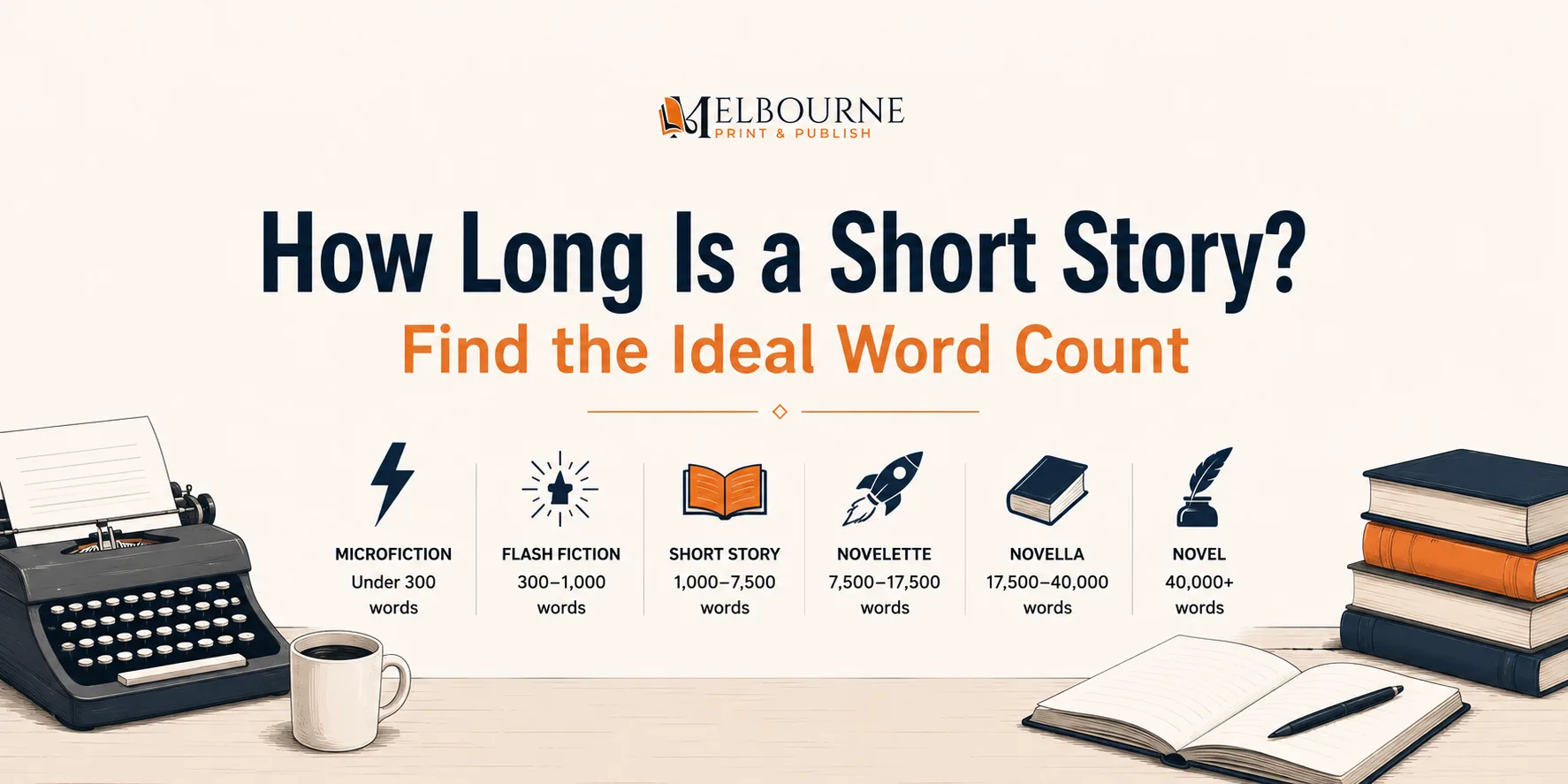
Not sure how many words your story needs? Learn the ideal length for flash fiction, short stories, novelettes, and novellas before sending it to a publisher.
Explore the 12 character archetypes, from Heroes and Rebels to Sages and Rulers. Discover their traits, motivations, flaws and how to make them memorable.