You've finished the manuscript. One friend tells you a book doesn't count unless a publisher takes it on. Another tells you nobody bothers chasing publishers anymore. A third hands you a pamphlet about ISBNs and vanity presses and legal deposit, and you leave the conversation less certain than when you started.
If that's where you are, this is written for you.
No. You do not legally need a publisher to get a book published in Australia. Under the Copyright Act 1968, your work is protected the moment you record it in material form, and there is no government register, licence, or permit a trade book has to pass through before it reaches a reader.
What you do need is a clear decision about which real route fits your book. There are three paths an Australian author can actually walk down right now without waiting on a traditional acquisition: a hybrid arrangement, where you share cost and risk with a partner; an author-services (assisted) route, where you own the book and pay specialists to produce it; or fully independent self-publishing, where you run every step yourself.
The traditional acquiring-publisher deal still exists. We'll acknowledge it as context later in this piece because the landscape isn't honest without it, but we won't be covering submissions, pitch letters, or how to chase an agent. There are dedicated Australian bodies that handle that advice, and this guide is written for authors who want to see the paths they can actually run themselves.
The old "you must have a publisher" rule is a cultural leftover, not a legal one. It's a hangover from an era when printing a book cost a fortune and shelving it in a bookshop meant persuading a handful of gatekeepers in Sydney or Melbourne to say yes. Print-on-demand, digital distribution and a genuine Australian author-services market have changed the maths completely.
What hasn't changed is that publishing a book well still takes a lot of specific work. The question isn't whether you need a publisher. It's which of those jobs you want to run yourself, which you want to hire specialists for, and which you'd rather hand to a partner.
The rest of this guide walks through that decision in the order a real Australian author needs: what a publisher's work actually consists of, the three paths we just mentioned, the Australia-specific legal bits nobody else answers properly, the marketing truth, how to spot a scam, what to check in an agreement, and a five-minute self-test at the end.
No prices. No pitches. No path pushed over any other.
A publisher's work is a bundle of individual jobs. Commissioning or selecting a manuscript. Paying for the editing and design. Printing the book or arranging print-on-demand. Pushing it into bookshops and online retailers. Handling the royalty accounting. Funding at least some publicity. Each of those is a real, time-consuming piece of work. And each one can be done by whichever party is best placed to do it, not only by an acquiring publisher.
Most writers picture a publisher as one job. In a working publishing operation, it's six or seven.
Someone has to decide which manuscripts a list can commercially support. For a traditional publisher, that's the acquisitions team. For an independent author, that decision is already made the day you choose your own book. For a hybrid or author-services partner, selection is still part of the process, but the author is the one who first said yes to the project.
This is often where new writers underestimate what a publisher does. A manuscript typically runs through structural editing (does the story or argument work?), line editing (does the prose sing?), copy editing (grammar, consistency, style), and proofreading (the final sweep). On a traditional path, those passes happen in-house or with contracted editors. On an independent path, the author hires each pass directly, and that's where a quality professional editing partner matters most; the finished book will only ever be as good as the edit it goes through. For a quick refresher on the difference between the final two passes, our explainer on editing vs proofreading for Australia is worth a read before you brief anyone.
Covers sell books, especially online, where the thumbnail is the first and often only chance to catch a reader's eye. Interior design, typesetting, back-cover copy, spine, print specification: all of these fall under production. A professionally produced book design brings a manuscript up to the standard a reader expects before they'll put money down.
Illustrated books add another layer. Picture books, graphic non-fiction, children's titles and heavily visual memoirs need a dedicated artist, which is why Australian authors working on this kind of project often engage a specialist book illustration service in Melbourne rather than treating illustration as an afterthought.
Then there's the physical object itself. Book printing services in Melbourne range from print-on-demand single copies for international distribution through to offset runs for launch events and bookshop stock. Which combination fits depends on genre, budget and launch plan rarely one or the other alone.
This is the piece a publisher clearly adds the most to: trade sales reps who sit down with Dymocks, QBD, Readings, independent bookshops, library suppliers and airport retailers across Australia and New Zealand to pitch the season's titles. Independent authors reach the same shelves through distributors and aggregators, which is slower and leaner but genuinely workable.
Catalogue listings, review-copy outreach to the Australian trade press, festival submissions, media pitching, foreign and translation rights, audio rights. On an independent path these jobs don't disappear. The author just picks which ones to run personally and which to hire specialists for.
The mental model to carry into the rest of this guide: a publisher is a bundle of jobs. Which jobs you need done, who does them, and who pays for them is the real question not whether to have "a publisher" at all.
Three practical routes are open to an Australian author who's decided to publish on their own terms. A hybrid arrangement, where author and partner share cost and risk. An author-services (assisted) route, where the author owns the book and pays specialists to produce it. And fully independent self-publishing, where the author runs every step themselves. A fourth route the traditional acquiring-publisher deal still exists, and this section acknowledges it as context, but doesn't cover submissions or pitching.
Traditional publishing hasn't disappeared. A traditional publisher takes on the full financial risk, pays for production, controls the schedule, and keeps most of the revenue in exchange for carrying that risk. The timeline is long, often somewhere between twelve and twenty-four months from signed contract to shelf. The acceptance rate is low. The author gives up a fair bit of creative control along the way.
If that route is what you want to pursue, the Australian Society of Authors and your state writers' centre are the right places to go for advice; they publish detailed submission guides and run manuscript assessment schemes specifically for authors chasing a trade deal. We won't be duplicating that work here. The rest of this piece is written for authors who've decided a publisher-takes-everything model isn't where they want to end up.
For a wider view of the Australian publishing landscape, our rundown of the top book publishing companies in Australia covers who publishes what, where they're based, and which ones are generally open to direct conversation.
Before you commit a year of effort to chasing a trade deal, these are the trade-offs the brochure doesn’t lead with.
The timeline is long. From signed contract to shelf typically runs twelve to twenty-four months, and that’s after however many months (sometimes years) of querying before the contract exists. If you’ve got a hard deadline tied to a speaking tour, a current event, or a series rollout, the timeline alone can rule the path out.
The acceptance rate is low. Australian trade publishers receive thousands of submissions a year and sign a tiny fraction of them. Rejection is usually about commercial fit, list crowding, or whether the publisher already has a similar title in the pipeline, rather than a judgement on your writing. That doesn’t make the rejections sting any less.
Creative control shrinks the moment you sign. The publisher usually has final say on the cover, the title, the subtitle, structural edits, the blurb, the price point, and the release date. If any of those matter to you, you’ll need to negotiate hard, and even then the publisher’s judgement typically wins.
The royalty share is small. On a traditional contract, the author keeps a modest slice of each sale, with the rest covering the publisher’s production, distribution and overhead. If the book sells well, the author’s cheque is still a fraction of the retail price. On an independent or author-services route, the author keeps substantially more of each sale.
Rights can get tied up for a long time. A trade contract often licenses rights for the life of copyright, with reversion clauses tied to vague “in print” language that print-on-demand makes almost meaningless. Getting your rights back if a book stops selling can be slower and messier than the contract first makes it sound.
Marketing expectations have shifted onto the author anyway. A publisher’s publicity team runs the launch window and a few weeks either side, but the sustained author platform work, the social presence, the mailing list and the ongoing visibility are now your job regardless. The assumption that signing with a publisher means marketing is handled is no longer accurate for most Australian debuts.
Option clauses complicate your next book. Most trade contracts include a first-look option on your next manuscript, which can mean waiting months for the publisher’s decision before you’re free to shop the next project around.
Hybrid sits in the middle. The author contributes to production costs, and in return the book is published under the partner's imprint, with professional editing, design and distribution attached. The Australian Society of Authors defines it as a model where author and publisher share the financial risk, and that definition is the honest one to carry into any contract conversation.
A legitimate hybrid arrangement is selective about which books it takes. It pays the author a meaningful share of sales. It uses recognised retail distribution so the book actually reaches readers. And it never guarantees a specific number of sales, a bestseller spot, or a prize shortlisting, because no one legitimately can.
The word "hybrid" is sometimes used as a dress-up term for vanity publishing, which is a very different thing. The scams-and-red-flags section further down in this piece covers how to tell the two apart in practice. If you want a deeper read on the model itself before you make any decision, our overview of hybrid publishing in Australia walks through what a real hybrid relationship looks like on the ground.
This is the path a lot of Australian authors land on once they've thought it through. You keep the rights. You remain the publisher of record. You pay a provider on a transparent fee-for-service basis to handle the pieces you don't want to run yourself: structural editing, cover and interior design, illustration, formatting, printing, author website, book trailer, launch marketing. The ISBN sits in your name, you own the final files, and you can walk away with the book at any time.
Melbourne Print and Publish operates in this space. If you're after a tailored conversation about what an assisted route would actually involve for your project, our publishing services page is where that starts.
The trust test for any author-services arrangement is simple. Does the agreement list the author as the publisher of record on the ISBN? Does the author keep the production files at the end? Does the provider offer transparent, itemised pricing instead of a mystery lump sum? If the answer to any of those is no, you're not looking at a legitimate author-services setup, whatever the marketing copy says.
The full DIY route. You buy your own ISBNs in your own imprint name. You upload to KDP, IngramSpark, Apple Books, Kobo, and Google Play directly. You pay each specialist separately: one editor, one designer, one proofreader, rather than committing to a package. You run every launch day as your own problem.
What you gain is full control, the highest royalty share per sale, and a timeline measured in weeks rather than years. What you take on is every operational decision, the admin, the tax, and the fact that no one else is pushing your book while you sleep.
Independent publishing is no longer treated as second-tier in Australia. Michael Winkler's independently published novel Grimmish was shortlisted for the Miles Franklin Literary Award, which was the clearest signal yet that an indie title can compete with trade-published books on the biggest literary stage in the country.
An independent author who doesn't want to do absolutely everything personally can still mix and match. One editor from a trusted provider. A different designer for the cover. A launch marketer for the first six weeks. That's not "author services" with a capital A; it's just hiring specialists piece by piece as the project demands.
No. There's no publishing licence for a general trade book in Australia. Copyright arises automatically, and no permit, registration or government approval is required to publish a book. There are a few separate obligations and conveniences people sometimes confuse with a licence, which this section unpacks one by one.
Under the Copyright Act 1968, your original written work is protected the moment you record it in material form. There is no copyright office you need to visit in Australia, and no fee for keeping your own copyright. A simple notice on the imprint page (your name and the year of publication) is good practice, but it isn't a legal requirement for protection to exist.
If you've ever been emailed about "registering" or "renewing" your copyright for a fee, that's not a legitimate Australian service. Delete the email.
An ISBN is a product identifier, not a licence. In Australia, ISBNs are issued by Thorpe-Bowker, not a government body. You buy them directly through their service.
Each format of a book needs its own ISBN: paperback, hardback, ebook and audiobook each get a separate number. If a service provider buys the ISBN for you, their name appears as the publisher of record on bibliographic databases. If you want your own imprint name on the record (and most authors do, eventually), you'll want to buy the ISBN directly in your own name or, at minimum, confirm with any provider that the ISBN will be registered in your imprint.
Once a book is made available in Australia, in print or electronic format, the author or publisher must deposit a copy with the National Library of Australia and, in most cases, the author's state or territory library. This is a free obligation under the Copyright Act. There's no application form to fill in. You just send the copies after publication.
Legal deposit isn't a licence. It's a preservation requirement, and it's the mechanism that gets independently published Australian books into the national collection, where they can be catalogued, borrowed and found by researchers decades later.
An author who's trading as a self-publishing imprint selling books, invoicing bookshops, and running a launch is running a business, which generally means registering for an Australian Business Number with the ATO. Once your turnover crosses the GST registration threshold, you'll need to register for GST too. Those thresholds move, so check the current figures with the ATO rather than relying on anything you read online. None of this is a publishing licence either, and it doesn't change your right to publish.
Australian authors whose books are held in public and educational libraries can register for annual Public Lending Right and Educational Lending Right payments through the federal Office for the Arts. It's a scheme that pays you for library use of your work, not a licence. Worth looking into once your book is in circulation.
Once you've got copyright (automatic), an ISBN if you want, and legal deposit covered (free), you've met every real-world requirement for publishing a book in Australia. There's nothing else to apply for.
Marketing a book is a set of specific jobs, not a magic bundle that comes with any particular publishing path. On any route you choose, your own involvement in building and keeping an audience is the single biggest driver of launch success, and independent authors can hire specialists for the pieces of the launch they'd rather not run themselves.
The question isn't whether marketing happens. It's who does each job.
Author platform is always the author's. Your website, your mailing list, your social presence, your relationships with local bookshops and festival organisers nobody can build those for you from scratch. A traditional publisher can accelerate some of this with publicity support, but even on a trade deal, a debut author today is expected to arrive with a platform already in motion, not wait for one to appear after launch.
Ongoing visibility is also the author's. Books don't stop needing attention three weeks after launch. The authors whose titles keep selling eighteen months in are almost always the ones who keep showing up, writing blog posts, running newsletter campaigns, speaking at festivals, and nurturing relationships with their readers.
On a hybrid or author-services path, the marketing split is spelled out in the agreement. A real agreement names exactly which pieces the partner is running: catalogue placement, review-copy outreach, retailer coordination, launch publicity, and which pieces stay with the author. There's no mystery and no implied promise.
On a fully independent path, 100 per cent of marketing is the author's call, but 100 per cent of the return on that marketing stays with the author too. The author can still hire specialists piece by piece without handing over control of the book. A dedicated book marketing campaign can cover the launch window, media outreach and ad management, while the author continues running the ongoing platform work themselves.
Marketing done properly isn't just paid ads. A well-built author website gives readers somewhere to land that isn't a retailer page. A working mailing list means you own your audience and don't rent them from a social platform. A professional book trailer gives you something to share across every channel you have. A good blurb short, punchy, specific to the reader you're writing for often does more for sales than a bigger ad budget.
If you're trying to work out what a realistic marketing spend actually looks like in this country, our breakdown of book marketer costs in Australia covers the ranges you'll see from freelance publicists through to full campaign management.
The common thread on every path is that the author's own involvement in marketing is the thing that holds the launch together. The only variable is how much of the work you do alone, and how much you pay specialists to run alongside you.
Match the path to what you actually want from this book. A hybrid arrangement fits when you want professional production under a partner's imprint and are comfortable sharing cost and risk. An author-services (assisted) route fits when you want the control and royalty share of independent publishing but want specialists running the production for you. Fully independent self-publishing fits when control, speed, and the biggest per-copy return matter most, and when you're ready to run the business side yourself.
Here's a quick comparison to make the differences visible side by side.
Factor | Hybrid | Author-services | Fully independent |
|---|---|---|---|
Who's the publisher of record | Partner's imprint | Author's own imprint | Author's own imprint |
Who runs production | Partner | Service provider (author directs) | Author (hires specialists piece by piece) |
Who owns the files and ISBN | Shared or partner | Author | Author |
Royalty share | Partner-weighted | Author keeps most | Author keeps most |
Typical timeline | Several months | Weeks to months | Weeks |
Author admin load | Low | Moderate | High |
Best for | Writers wanting imprint prestige with shared risk | Writers wanting professional production with full ownership | Writers wanting full control and highest margin |
Spend five minutes with these before you commit to anything.
1. How much of the production work do you want to run yourself? If none, author-services or hybrid is a better fit than going fully independent. If all of it, the independent route is where you'll land, and you'll build your own team of freelancers.
2. Is there a hard deadline you need to publish around? Speaking tour, conference, event, series launch? The faster paths author-services and fully independent are better suited than hybrid, which can still run several months end to end.
3. Who do you want listed as publisher on the book itself? If your own imprint name matters to you (and it increasingly does for authors building a career), author-services and fully independent routes both keep you as the publisher of record. A hybrid imprint will list the partner.
4. Do you have or will you build an audience of your own? Mailing list, speaking platform, social reach, newsletter following. The bigger your platform, the stronger the case for independent or author-services, because you keep most of the margin on the sales that your platform drives.
5. Can you commit money up front to production? If yes, you've got the full range of options. If budget is tighter, fully independent plus staged hiring editing first, design next, launch marketing last is the most forgiving path, because you can space the investment out as the project earns.
Genre matters too. Romance, thriller, speculative fiction and series fiction have thriving independent markets in Australia, where fully independent publishing often works best because the author can move quickly between titles. Literary fiction and heavily designed non-fiction tend to benefit from the production support of a hybrid or author-services setup.
This isn't a one-way door. Plenty of Australian authors publish their first book one way and their next book another as they figure out what they actually want from the process.
A vanity publisher makes most of its money from the author, not from readers. The usual signs are an unsolicited "we love your manuscript" email, pressure to commit before you've seen a plan, no itemised breakdown of what the fee covers, a guarantee of bestseller status or specific sales, and a trading name suspiciously close to a well-known Australian publisher. If any one of those is present, pause and verify before you sign or pay anything.
Right now in Australia, imposter publishers are a specific problem worth naming. They use logos, wording, and trading names very close to real Australian independents, then cold-contact first-time writers with "publishing offers" that funnel into expensive packages. The pattern is more important than any one party. Learn to recognise the pattern, and you'll spot a new one the week it appears.
Unsolicited first contact. A legitimate publisher or author-services provider doesn't cold-email strangers demanding manuscripts. If someone found you on Instagram and told you your book deserves publication, your scepticism is correctly calibrated.
Guarantees of outcomes. Bestseller status. A specific number of sales. Prize shortlistings. Film rights sold. No legitimate operator in Australian publishing can guarantee any of these. If it's in writing, it's a tell.
Single bundled fees with no breakdown. A real quote lists what you're paying for: structural edit, line edit, copy edit, proofreading, cover design, interior design, formatting, print setup, ISBN, launch marketing. A single number with no itemisation is a warning.
Pressure to sign fast. If you're being pushed to commit before you've seen a plan tailored to your specific book, pause. Legitimate providers take the time to understand what you're writing before they quote on it.
Rights grabs. Any clause taking exclusive rights for an indefinite term, or ownership of the ISBN or final files that should sit in the author's own name, is where a legitimate agreement and a vanity contract clearly part ways.
No visible pricing, no checkable testimonials, no imprint presence. If the company has no transparent pricing anywhere on its site, no testimonials with real author names you can look up, and no imprint listed on actual Australian book retailer pages, you're looking at something built for cold outreach, not for real publishing work.
Trading names close to a real publisher's. One letter off. One word swapped. A domain that uses .com instead of the real publisher's .com.au. These are deliberate, not coincidence.
Before you sign or pay anything, do these three things.
Search the company's exact name on the Australian Society of Authors website, and on Writer Beware (the long-running international watchdog that catalogues publishing scams). If a warning exists, you'll find it.
Ask for a complete, itemised contract and quote in writing before you commit. Watch what happens when you ask. A legitimate operator sends it. A scam goes quiet or applies pressure.
Have the contract read by Arts Law Centre of Australia or an independent legal reviewer before signing. For members, Arts Law offers plain-English contract reviews, and it's one of the single best uses of a membership fee an Australian author will make.
Paying for publishing services isn't itself a scam. A legitimate author-services provider gives transparent pricing, keeps the ISBN and files in the author's name, and never pressures. The scam is in the pattern, not in the model.
Before you sign a hybrid contract or an author-services agreement in Australia, make sure you understand who ends up owning what, what each party has to deliver, who holds the ISBN, who owns the final files, how income is paid, and how you end the arrangement if it stops working. An agreement is where every verbal promise becomes real or disappears. Read it twice, and have someone independent read it once.
Rights and ownership. In an author-services arrangement, the author should keep copyright, the ISBN, and the final production files. In a hybrid arrangement, the partner licenses specific rights for a defined term, and those rights should be spelled out: print only, print and ebook, audio included or excluded, Australia and New Zealand only or world English rights, and so on.
Deliverables. Exactly what each party is doing. How many editorial passes. How many design rounds. Which formats are produced (paperback, hardback, ebook, audio). Which files are handed over at the end of the project. If the deliverables aren't specific enough that you could tick them off a list, they aren't specific enough.
Royalties or sales income. How retail and distribution income is split, on what price (recommended retail or net receipts after retailer discounts), and when it's paid out. "Royalty on net" and "royalty on RRP" produce very different numbers, so make sure you understand which one the contract uses.
Term and exit. How long the agreement runs. How either party ends it. What happens to the files and the ISBN on exit. A reversion clause tied to "books in print" is almost meaningless in a print-on-demand world, because the book is technically always in print. Look for a sales-threshold reversion instead: "if sales fall below X copies in Y months, rights revert" because that actually gives you a way out if the book stalls.
Marketing commitments. What the service partner is actually obliged to do, in writing, not just "intends to do". Intentions are not deliverables.
Revisions and reprints. Who pays for reprint corrections, who approves a new edition, and whether the author can take the book elsewhere later. Books live for years, and the agreement needs to cover what happens when something needs to change.
The Australian Society of Authors runs a contract advice service for members, which is one of the stronger practical reasons to join. The Arts Law Centre of Australia offers contract review for its members too, and both bodies deal with hybrid and author-services agreements as readily as they do with traditional contracts.
One scenario-specific trap worth naming: an agreement that lists the service provider as the publisher of record on the ISBN quietly reduces your long-term control of the book. If you ever leave the provider, the ISBN still points to them, which affects how the title is catalogued and distributed. Insist that the ISBN be registered in your own imprint name wherever possible, or that it transfers to you cleanly on exit.
Good looks like this: an agreement where you can explain, in your own words, who owns what, who delivers what, how income is paid, and how you walk away if the relationship stops working. If you can't do that after reading it twice, read it a third time, or ask someone to read it with you.
Australia has a strong, free or low-cost network of writers’ bodies and official agencies that will give you an independent second opinion before you commit to any publishing path. Use them before you sign anything, and before you pay anything.
Professional authors’ associations. The national body for Australian writers publishes contract advice, pay-rate benchmarks and a simple getting-published guide. Membership typically gives you access to contract-review services, which is one of the most practical reasons to join early in a project.
State and territory writers’ centres. Every state and territory in Australia has a writers’ centre that runs workshops, mentoring, manuscript assessment schemes and advisory sessions, usually at low cost and often with scholarships for emerging writers. If you’re based in a regional area, these centres are often the warmest and most honest first conversation you can have about your book.
Arts legal information services. Dedicated legal advice services for Australian creatives cover copyright, author contracts and vanity-publishing risks in plain English. A member hotline is usually available at a modest annual cost, and it’s the closest thing to a straightforward legal second opinion that doesn’t require booking a solicitor.
ISBN registration. Buying your own ISBNs in your own imprint name is what makes you the publisher of record on your own book. Each format (paperback, hardback, ebook, audio) needs its own identifier, and registration is handled through the official Australian agency once you’ve chosen your imprint name.
Legal deposit requirements. Every independently published Australian book should be lodged with the national library and, in most cases, your state or territory library after publication. The process is free, and the written guidance available online walks you through what to send and where.
Tax and small-business guidance. A small-business accountant or bookkeeper is worth a call before your first invoice goes out, so you set up ABN registration, GST registration where applicable, and the tax treatment of royalty, advance and author-services income correctly from the start.
Government arts funding and lending-right schemes. The federal arts funding body administers lending-right schemes, which pay Australian authors annually for library holdings of their books. Registration is free, and once you’ve got a book in circulation it’s a slow but reliable additional income stream worth claiming.
Industry trade publications. Independent trade publications for the Australian and New Zealand book industry are a useful subscription for tracking which scams are currently in circulation, which publishers are opening and closing submissions, and what’s happening in the local market more broadly.
Talk to these bodies first. Nothing you pay to a publisher, hybrid partner or service provider should feel urgent enough to skip a free second opinion.
The next step isn't another article. It's a direct conversation about your book, the audience it's written for, the budget you're working with, and the publishing path that genuinely fits.
That's where a tailored plan actually starts, rather than a one-size answer. We work with Australian authors on every stage of the independent publishing process, from a first non-fiction ghostwriting or fiction ghostwriting brief through to a full launch, as well as individual services like book proofreading, book formatting, academic proofreading and author website development for writers who already have the manuscript handled.
Get in touch for an honest conversation about which path fits this specific book. No pressure, no guaranteed-bestseller promises, no quotes before we understand what you're actually writing. The answer to "do I need a publisher?" is different for every author, and the only way to work out your answer is with the manuscript in front of us.
No. In Australia, you don't need a publisher to publish a book. Copyright protection is automatic the moment you write the manuscript, and no licence or government approval is required. The real paths open to Australian authors right now are hybrid, author-services (assisted) and fully independent self-publishing, plus the traditional acquiring-publisher route if you choose to pursue it separately.
You can publish on your own. The practical steps are buying an ISBN from Thorpe-Bowker in your own imprint name, hiring editors and designers directly, uploading to the major retailers (Amazon KDP, IngramSpark, Apple Books, Kobo, Google Play), and lodging legal deposit copies with the National Library of Australia after publication. The path requires more admin from you, but it gives you full control, keeps more of each sale in your pocket, and gets the book to readers in weeks instead of years.
Partially, and much less than most first-time authors expect. On any path, the author's own involvement in building and keeping an audience is the single biggest driver of launch success. A traditional publisher can add catalogue placement, trade publicity and bookshop coordination. On hybrid and author-services paths, the marketing commitments are spelled out in the agreement. On a fully independent path, the author runs or hires every piece of marketing themselves. Marketing is a job, not a bundled extra, and it needs the same deliberate planning whichever route you take.
No. There's no publishing licence for a general trade book in Australia. The three things people sometimes mistake for a licence are copyright (which is automatic the moment you record the work), an ISBN (which is a product identifier from Thorpe-Bowker, not a licence), and legal deposit (which is an obligation to send copies to the National Library of Australia, not an application you need to be approved for). Once you've got those covered, you've met every real-world requirement for publishing a book.
A publishing operation runs commissioning, editorial, design, print, distribution, publicity and rights. Every one of those jobs is now available on a fee-for-service basis to Australian authors. In practical terms, there's very little a publisher does that you can't arrange yourself if you're willing to coordinate the specialists. The piece a traditional publisher most clearly adds is bookshop and library distribution through established sales reps, which independent authors reach through distributors and aggregators instead.
A traditional publishing house owns the commercial risk and keeps most of the revenue from a book. A legitimate author-services provider is paid a transparent fee and leaves the rights, royalties, ISBN and final files with the author. The distinction matters because this is exactly where vanity-publisher scams try to blur the line, charging publisher-level upfront fees while still taking publisher-level control of the book.
For a debut on a traditional contract, a publisher typically handles editorial, cover design, catalogue listing, review-copy outreach, trade sales to Australian bookshops and library suppliers, submission to major Australian literary awards, and some launch publicity. The expectation that the author will also carry a significant share of promotion has grown steadily over the past decade. On hybrid, author-services and independent paths, those same jobs still happen, but by different combinations of the author, hired specialists and (where applicable) a service partner.
The production jobs editing, design, print, distribution admin, royalty accounting can all be hired out or handled by a partner. The author-facing jobs building an audience, carrying public-facing promotion, keeping the book alive beyond launch week, nurturing reader relationships stay with the author on every path. That dividing line is the same whether you've got a traditional deal, a hybrid imprint, an author-services provider or you're running the whole thing independently. Only the proportions change.


Learn the difference between your, you're, their, they're, and there with simple tips that help you avoid common grammar mistakes in everyday writing.
Understand tone in writing, from formal and playful to serious and sarcastic, and learn how the right tone can shape your reader’s response.
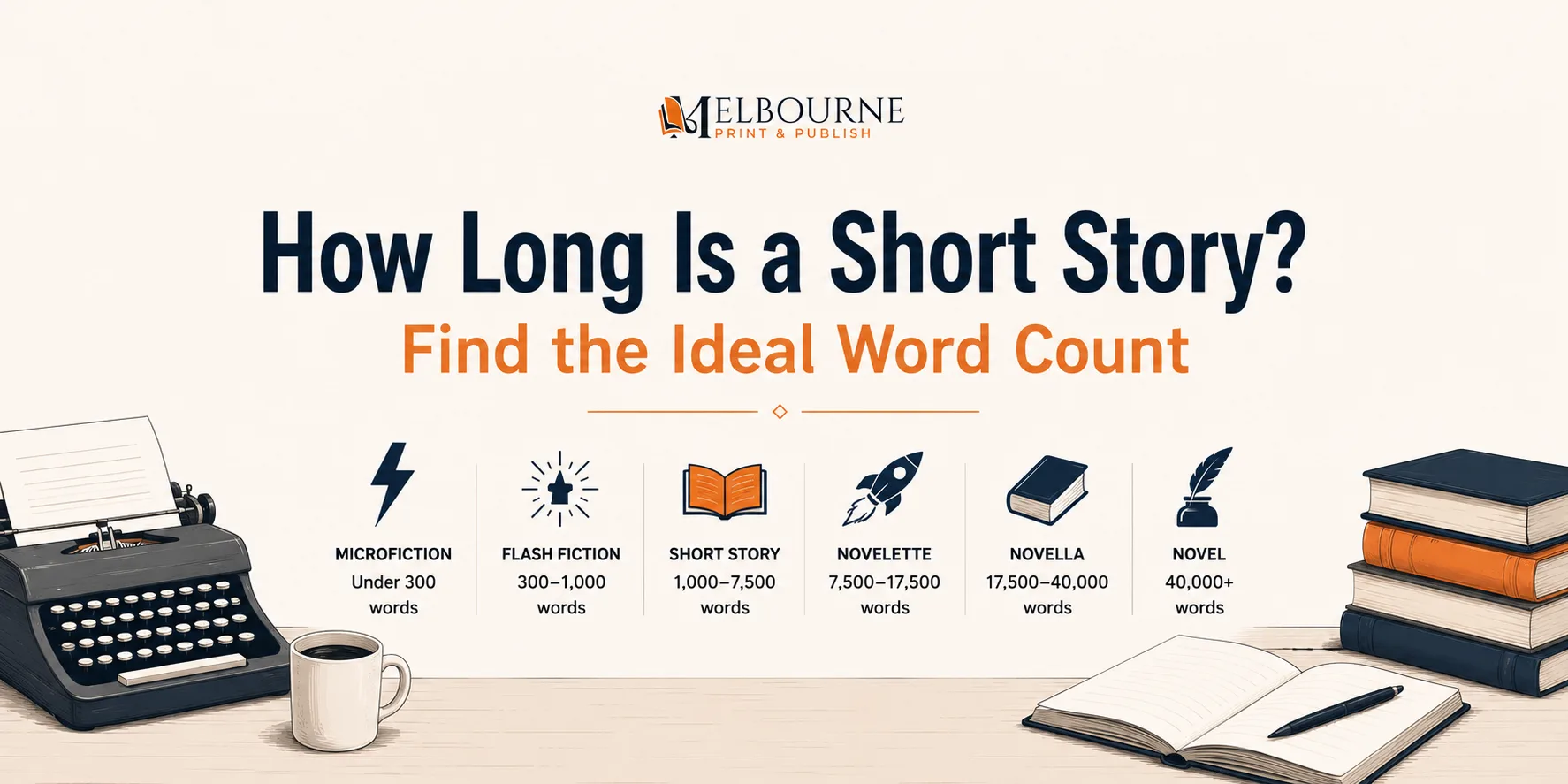
Not sure how many words your story needs? Learn the ideal length for flash fiction, short stories, novelettes, and novellas before sending it to a publisher.
Explore the 12 character archetypes, from Heroes and Rebels to Sages and Rulers. Discover their traits, motivations, flaws and how to make them memorable.