There is no single figure that honestly answers this question for every book. Ghostwriting in Australia is priced as a range that shifts with the scope of the manuscript, the experience tier of the writer, the pricing model the writer uses, and the production choices the author makes around the finished text. A quote that looks generous for one project can look thin for another, and two apparently similar proposals can conceal very different interview commitments, research responsibilities, revision allowances and rights arrangements.
What matters for an Australian author staring at a quote is not the headline number. It is whether that number is defensible for the book in front of them, the writer's demonstrable track record, and the Australian market the book is being published into.
This guide walks through those drivers in plain Australian English. It explains how the pricing models work in practice, which project variables move the quote up and which move it down, where the hidden costs sit outside the writer's fee, how the Australian legal framework shapes the contract, and what a professional proposal should include before any money changes hands.
By design, no specific figure appears anywhere in this piece. Published numbers age quickly, most are drawn from international marketplaces using other currencies and tax systems, and they are a poor substitute for the judgement an author actually needs when a quote lands. The intention here is to give you the reasoning, so you can evaluate the quote itself.
If you are already weighing your options and want to see how the brand that publishes this guide approaches the work, the overview of our ghostwriting services in Melbourne sits alongside the practical advice below.
A 25,000-word legacy memoir drafted from existing family interviews is not the same project as an 80,000-word business book that requires five executive interviews, independent market research and a book-proposal package prepared for submission to a trade publisher. Even if both are written by the same ghostwriter, at the same experience tier, in the same calendar quarter, the fair quote for one is the wrong quote for the other.
Averages reported in online guides hide that difference. They combine word counts, genres, experience tiers, and pricing models into one summary figure that applies to no actual project. The number is tidy. It is also unusable for budgeting.
The Australian specifics make this worse, not better. Most online ghostwriting cost guides draw their data from American freelance marketplaces, quote in United States dollars, assume American contract norms, and include no local tax or professional context. They can be useful as a first orientation. They are not a budget for an Australian author.
Three structural variables sit behind every quote you will receive. The first is what the book actually is: scope, word count, interview load, research depth. The second is who the writer actually is: career stage, portfolio, specialism. The third is how the writer charges: the pricing model they have chosen for this project and why. Everything in the rest of this guide expands on those three variables.
Move your attention from "what is the number?" to "what is driving the number?" and the quotes in your inbox become comparable for the first time.
Australian ghostwriters quote in one of five ways: per word, per hour, flat project fee, retainer, and royalty share, with a hybrid of fee-plus-royalty available in some commercial cases. For book-length work, the flat project fee is the dominant model, because a manuscript's value is not well measured in hours and per-word pricing becomes unpredictable as the text grows.
Each model protects a different set of interests, and recognising which model is in front of you is the first step in asking the right questions. The subsections below walk through each in turn.
In a per-word arrangement, the writer sets a rate per word of the final manuscript, and the quote is simply that rate multiplied by the agreed word count. The scope is defined in the contract, and anything outside it is priced separately.
Per-word pricing suits scoped short-form work: a book proposal, a sample chapter commissioned as a test, a back-cover blurb, or a short ebook under about 20,000 words with a tight remit. It gives the author a linear view of cost against length, which is useful when the deliverable has a clear word budget.
For a full-length book, the model becomes less predictable. Scope creep costs more linearly, interview and research overruns are absorbed inside the per-word rate rather than billed separately, and the quoted number does not capture the variable time the writer actually spends on research and interviews. Most experienced Australian ghostwriters avoid per-word pricing for anything longer than a short book, reserving it for pieces where the deliverable is a defined word count rather than a finished manuscript.
If a per-word quote is on your desk, the useful question is: what does each word of the final text include? A rate that covers only drafting is a different product from a rate that covers drafting, interviews, research, revision rounds and proofreading of the writer's own text before handover. The line between a ghostwriting rate and the surrounding editorial work matters here, which is worth reading alongside our guide to editing vs proofreading for Australia.
Hourly pricing bills against the writer's actual time, with an estimated budget of hours agreed up front. The writer produces timesheets, the author approves hours, and the invoice tracks work done rather than words produced.
This model fits consultative work: book coaching, developmental consulting on a partial manuscript, a rewriting pass across an existing draft, or a project where scope will genuinely change as the book takes shape. It also fits the first few sessions of exploratory work before a full engagement is agreed, because it lets both sides feel out the project without committing to a full-book contract.
For a full book, hourly billing carries real risk. Hours can balloon without a hard cap. Interview delays, research rabbit holes, scope creep, and revision requests all land inside the hours budget rather than against a fixed deliverable, and the author can end up paying more than a flat-fee quote would have totalled.
A fair hourly arrangement includes four things in writing: a maximum hours budget, a written sign-off requirement before the cap is exceeded, regular visible timesheets, and a defined deliverable at the end of the engagement rather than hours alone. Without those, hourly billing favours the writer's revenue over the author's budget certainty.
The flat project fee is the dominant pricing model for a full-length Australian book, and for good reason. The writer quotes one figure for the complete manuscript, paid in milestones. A common Australian structure splits the fee across four payments: on contract signing, on delivery of the first draft, on delivery of the revised draft after author feedback, and on final sign-off. The exact split is negotiable.
The appeal for an author is cost certainty. One number carries into the rest of the production budget, milestone payments spread the outlay over the writing period, and both sides are clear on what is being delivered and when.
The trade-off sits in the scope document. A flat fee is only meaningful when the attached scope describes the book's word count, interview commitments, research depth, number of revision rounds included, delivery timeline, and what sits outside scope. Vague flat-fee quotes written as single-line summaries are the most common origin of later disputes, because every new request lands in an unlit area between "obviously included" and "obviously extra".
The practical rule when evaluating a flat-fee quote is to read the scope before the fee. A short, specific scope document attached to a higher fee usually represents better value than a long, general promise attached to a lower one. Flat project fees sit inside both of our book-length writing services, whether you are working on a non-fiction ghostwriting service in Melbourne commission for a business or memoir project, or one of our fiction ghostwriting services in Melbourne for a commercial or literary novel.
A retainer arrangement locks in a monthly fee for a defined volume of writing across an agreed period. The author pays the same amount each month, and the writer is available for a set number of hours or an agreed output.
Retainers fit authors with an ongoing writing need rather than a single book. A founder commissioning a book plus thought-leadership content, speeches and long-form articles, or an author committed to a series of books over two or three years, can use a retainer to keep the same writer across multiple projects without renegotiating from scratch each time.
For a single book, a retainer usually works out more expensive than a flat project fee, because the author ends up paying for availability during months when less work is produced. The exception is a book that comes with substantial launch content, where the retainer covers the manuscript and the surrounding marketing, publicity, and content work in a single arrangement.
If a retainer is proposed for a single book, ask what the writer's monthly output commitment is and how unused hours roll over or expire. Retainers without a clear output expectation convert easily into a slow, expensive engagement that neither side manages well.
A pure royalty share asks the writer to take no fee upfront and a percentage of the book's royalties on the back end. A hybrid asks the writer to take a reduced flat fee combined with a smaller royalty percentage.
Most professional Australian ghostwriters decline pure royalty arrangements. The reasons are practical, not combative. Most self-published Australian titles earn modestly in royalties, the writer has no control over the author's marketing, platform or launch, and the writer is being asked to carry the project's downside risk for upside they cannot steer.
Hybrid structures can work when three conditions hold together. The author has a demonstrable platform, measured in existing book sales, speaking fees, a verifiable audience, or a serious marketing budget. The royalty share is modest in size and time-limited. Audit rights sit in the contract so the writer can verify sales figures. Without those conditions, a hybrid is usually a dressed-up royalty share.
If an offer comes with language suggesting the writer should accept lower pay because the project will "make everyone rich later", treat that as a cue to walk away. Professional writers price based on the work in front of them, not on speculative future returns.
Behind every quote are seven moving parts: the scope of the book, the genre and complexity, the experience tier of the writer, the research and interview load, the timeline, the number of revision rounds, and the rights and credit structure. Each driver independently moves the fee, and together they explain why two quotes for apparently similar books can arrive at very different numbers.
Word count is the single biggest driver of a ghostwriting fee, because it is the closest proxy for time on the manuscript. A clear scope that locks the word count protects both sides.
Practical Australian ranges that matter for scoping (not for price) sit around 20,000 to 40,000 words for a legacy memoir or short-form book, 40,000 to 60,000 words for a standard non-fiction business or self-help title, and 70,000 to 100,000 words for a full-length commercial novel. Thought-leadership and academic-crossover books often run longer.
An inflated word count does not usually help an author. Shorter, tighter books tend to perform better in most Australian commercial categories, and a writer who quotes aggressively against a padded word target is often quoting against work that will not improve the book. Lock the word count against what the book actually needs, not against what feels impressive, and then commission the full production chain, which sits inside our broader book publishing services.
Genre changes the proportion of the project that is drafting versus interviewing, researching and shaping. Non-fiction books typically carry more interview and research load per thousand words of final manuscript than commercial fiction does, because the writer is reconstructing lived experience, expertise or argument from source material rather than inventing structure from scratch.
Complexity-driven premiums are real in medical, legal, financial, scientific and technical books. The writer carries accuracy and liability responsibilities most generalist writers cannot, and the time required to verify claims against primary sources raises the hours against any given word count.
Australian specifics matter here too. A book that includes Indigenous voices requires cultural consultation and protocol work. A memoir that touches living third parties invites defamation exposure that an experienced writer will build mitigation time into. A business book that references regulated conduct, financial products or therapeutic claims should carry fact-verification time against the relevant Australian regulator. These are not add-ons. They are the professional minimum.
Writers sort honestly into tiers: entry-level, mid-career, senior and marquee. Entry-level writers are building a portfolio and can produce good work on the right project, usually with closer oversight and a tighter scope. Mid-career writers have a visible portfolio of completed books and can carry a standard-scope project independently. Senior writers have a long Australian publishing track record, named credits where their contracts allow attribution, and often a specialism. Marquee writers are recognisable industry names approached by agents, publishers and public figures directly.
The experience premium is not a pure luxury markup. A senior writer completes a brief faster, catches structural problems earlier in the draft, and produces a manuscript that needs less structural editing afterwards. Some of what looks like a higher ghostwriting fee is reduced downstream editorial and rewrite cost.
At the top of the market, a slice of the fee pays for the name on the credits page or the reputation behind the manuscript. An author whose project will never disclose the writer may be paying a premium that would sit better invested elsewhere in the production chain.
Non-fiction ghostwriting is built from interviews with the author, supplemented by research the writer conducts around the author's material. Each interview typically takes about an hour of the author's time and several hours of the writer's, counting preparation, recording, transcription, and structural note-taking.
Research load varies widely by project. A business book drawn from the author's established expertise may require relatively little external research, with the interviews doing most of the structural work. A memoir that touches public events, archival material, or third-party testimony can require weeks of archival time. A regulated or technical book needs factual verification against primary sources before the writer can safely commit the claim to the page.
The practical rule is that the more preparatory material you provide, the lower the writer's research load and the more realistic the quote. Interview recordings, past speeches, blog posts, prior writing, structured notes, a rough chapter list and any existing manuscript material all reduce the writer's time without reducing the book. Think of this preparation as part of the project, not as something separate from it.
Full-length Australian ghostwriting projects typically run six to twelve months from first interview to final manuscript, though the exact length depends on word count, interview availability and the number of revision rounds. Shorter projects complete faster; longer or more complex projects can run longer.
Compressing the timeline costs money. The writer has to decline other work, cover the opportunity cost in the quote, and often work weekends to hit a hard deadline. Rush premiums are usually transparent, but should be itemised in the contract rather than absorbed into a single headline figure. A rushed project also compresses revision time, which can show in the finished manuscript.
The end of the Australian financial year in late June and the pre-Christmas window are the two busiest periods for Australian communications writers, and rush fees are harder to negotiate around them. If your launch calendar allows it, plan the manuscript commission to clear those windows.
A standard Australian flat-fee ghostwriting contract includes a defined number of revision rounds, typically two or three, with the scope of each round written in. Additional rounds are billed separately, and new work outside the agreed scope is treated as a scope change rather than a revision.
Uncapped revisions are the most common reason flat-fee quotes feel unfair in hindsight. A fair contract defines what a revision round covers, what falls inside the original scope, and what counts as new work. "The author can request changes until satisfied" is not a revision policy. It is an open-ended commitment the writer cannot price.
Revision rounds during the ghostwriting engagement are not a substitute for an independent editorial pass once the manuscript is signed off. Ghostwriters edit their own work as they go, and good writers edit it thoroughly, but a book still benefits from an independent editor who has not lived inside the draft. The shape, scope and cost of that work sits inside our professional editing service rather than inside the ghostwriting fee.
In a standard Australian ghostwriting engagement, the writer assigns copyright in the manuscript to the author on final payment. The author ends up owning the text, the structure, and the right to publish, adapt and license it. The writer retains no reuse rights over the book's content.
Credit is a separate variable. A ghostwriter can be fully uncredited, named on the acknowledgements page, or named as "with" or "and" on the cover. Uncredited work typically costs more than credited work, because the writer cannot use the project to build a public portfolio and therefore prices in that opportunity cost.
Moral rights sit alongside copyright and work differently in Australia from the United States and the United Kingdom. The implication for your contract is that credit and attribution questions must be handled through clear, specific, informed consent to particular acts, not through a blanket US-style waiver. The legal-context section below walks through what that means in practice.
Both are legitimate routes, and the right answer depends on the book rather than on a blanket preference. A cheaper international writer is a real option for some projects. A local Australian writer is the better answer when voice fit, cultural specificity, interview scheduling, and contract jurisdiction matter to the book.
Local Australian writers bring natural voice fit for Australian readers, Australian English without conversion work, same-time-zone interview scheduling, familiarity with Australian institutions and places, a contract that sits inside Australian jurisdiction, and moral-rights handling under the Copyright Act 1968. For a memoir rooted in Australian life, a business book addressed to Australian readers, a regional story, or any project that references Australian geography, history, institutions, Indigenous culture, slang or humour, those factors are not optional. They are the book.
International writers offer a larger overall talent pool, often lower headline rates, and sometimes easier access to a specialist in a narrow field. They also introduce voice-fit adjustments for Australian readers, time-zone-aware interview scheduling, contract jurisdiction questions, currency-exchange and payment-processing considerations on top of the quoted fee, and in some cases a moral-rights framework that does not map neatly onto Australian law.
The specific trap worth naming is an English-fluent writer whose English is nonetheless not natively Australian. The resulting manuscript reads correctly, but sits slightly off: the idioms are wrong, the place names are stated rather than assumed, the narrative instincts around point of view are off-register, and the rhythms of the prose do not quite match how Australian readers hear a page. These are the hardest things to retrofit, and the most common complaint from authors who hired cheaply offshore for a book that was always about Australia.
For a technical book where expertise matters more than voice, the local-or-overseas decision opens up. For almost any book carrying Australian cultural weight, a local writer earns the premium.
The ghostwriter's fee is not the whole cost of taking a book from first interview to launched copies. Several separate line items sit outside that fee, each requiring its own decision and its own budget. Underestimating this chain is the most common budgeting error Australian authors make, because the ghostwriting quote looks like the big number and the other costs look small individually. Added together, they are not small.
Professional editing is the first external commission. Even the best ghostwritten manuscript benefits from an independent editorial pass before it enters production. Developmental, line, and copy editing are separate stages, in that order, and the ghostwriting contract does not usually include any of them.
Proofreading is the final pass against the typeset proof. It catches typesetting errors, broken line breaks, orphaned words, and surface-level mistakes that have survived earlier edits. The scope and cost of that work sits inside our book proofreading services in Melbourne rather than inside the ghostwriter's quote.
Cover and interior design is what the reader sees before they read a word. Covers sell books; interior design determines whether a reader finishes the first chapter. Both commissions sit inside our book design service.
Interior formatting prepares the manuscript file for print and ebook. This is specialist work with its own technical requirements for Australian print partners and the major ebook retailers, not a matter of exporting a Word document. Our book formatting services in Melbourne handle both.
ISBN and metadata preparation goes through the authorised Australian national ISBN agency, which licenses identifiers through its my identifiers service. Each distinct tradable format of the book (paperback, hardback, ebook, audio) carries its own ISBN, and metadata preparation feeds into trade distribution and library cataloguing systems.
Print production then sets the unit economics for the physical book. Short-run, offset and print-on-demand options have different per-copy costs, lead times and quality characteristics in Australia than they do in the United States or United Kingdom. The choice depends on the launch plan, which sits inside our book printing services in Melbourne.
Launch marketing is the chain's last expensive stage. Pre-orders, launch events, podcast and press outreach, trade reviews and digital advertising all sit outside the manuscript budget. Serious Australian authors plan this chain early, which is why we build it into our book marketing work rather than treating it as an afterthought.
The author platform matters too. A simple book-landing page or a fuller author presence lets readers find you, journalists research you, and future opportunities arrive. This sits inside our author website development services in Melbourne. And for visual promotion, a short, well-made video for social, pre-order and launch use adds another line item through our book trailer video services in Melbourne.
The decision is not whether to carry these costs. It is which ones you commission together, which you stage over time, and which you accept might need to wait for a second book. Budgeting only for the ghostwriter's fee is budgeting for a manuscript, not for a book.
The useful question is not "what will a ghostwriter charge me?" It is: "given the material I actually have, the time I can actually give, the platform I actually hold and the publishing route I actually want, which ghostwriting arrangement makes financial sense?" A full ghostwrite is one of several real options, and the right one depends on where the manuscript sits today.
A short self-diagnostic helps. If you have no draft, a strong story and no writing time, a full ghostwrite with a flat project fee is the standard route. If you have a partial draft with structural problems and some writing time of your own, a developmental edit followed by a line edit is usually cheaper and often better. If you have a strong professional platform and are preparing to approach a traditional trade publisher, a book-proposal-only ghostwrite can validate the project before you commit to the full-manuscript spend.
Publishing route changes the calculus. Traditional Australian trade publishers cover editorial and production costs once they acquire a book, which means an author pursuing that route is budgeting principally for the manuscript (or the proposal), not the production chain. The question of whether to pursue a traditional deal at all sits inside our guide on do you need a publisher, which is worth reading before you commit a ghostwriting budget.
Hybrid publishers share production costs with the author and take on some trade distribution work, with contract structures that vary widely. The practical shape of those arrangements is covered in our overview of hybrid publishing in Australia.
Self-publishing carries every cost in the previous section but hands you full control and the full royalty. A sense of the Australian publisher landscape, including the hybrid and full-service options available to independent authors, sits in our rundown of the top book publishing companies in Australia. The marketing side of the self-publishing budget is covered separately in book marketer cost in Australia, because the questions around launch are different from the questions around manuscript production.
Before you request a quote, do the preparation work that almost always lowers the fee without reducing the book. Collect your existing material: interview recordings, old blog posts, speeches, prior writing, structured notes. Draft the book's core promise in one or two sentences. Build a rough chapter list, even if provisional. Make an informed choice about voice, which is where our explainer on what is tone in writing is useful. Decide the point of view the book will take, covered in what is first person point of view. If you are still clarifying the subject matter itself, work through how to find things to write about. And if you are already thinking about how the book positions itself to readers, our note on how to write a book blurb sharpens the brief you will hand the writer.
A writer who receives a prepared brief writes a different book from one who starts with a blank page.
An Australian ghostwriting quote sits inside a specific legal and professional framework. Copyright assignment, moral rights under the Copyright Act 1968, GST on the invoice, and the role of Australian professional bodies all shape what a fair contract looks like. These are not peripheral details. They are the structure the quote rests on.
The Australian Society of Authors (ASA) is the peak national body representing Australian writers and illustrators. The ASA publishes recommended rates of pay for freelance writing and other author activities, runs public rates trackers that record what writers are actually being paid in the open market, and advocates on authors' behalf to government and industry. The ASA's own submission to the Fair Work Commission on modern awards in arts and culture is explicit that its rates are voluntary rather than enforceable, and the ASA has not historically published a specific book-ghostwriting rate card. The rates guidance that does exist sits around freelance writing, illustration and appearances, and is best used as an orienting benchmark rather than a book-ghostwriting price list. Reconfirm current recommended rates directly on asauthors.org.au before relying on them.
The Australian Writers' Guild (AWG) is the national industry body for performance writers, with a public contracts and rates page on awg.com.au. Its rates guidance is primarily oriented to performance writing (screen, stage, television, documentary) rather than to book manuscripts, so while many Australian writers who work across book and performance writing reference it, it is not a book-ghostwriting price benchmark. Use it for what it is.
Moral rights sit inside the Copyright Act 1968 (Cth), introduced by the Copyright Amendment (Moral Rights) Act 2000 and extended to performers in 2007. Australian authors have three moral rights: the right of attribution of authorship, the right against false attribution of authorship, and the right of integrity of authorship. Unlike in the United States, moral rights cannot be assigned or waived under Australian law.
The practical implication for a ghostwriting contract is that credit and attribution questions must be handled through informed, specific consent to particular acts (such as the writer consenting to remain uncredited for this book), rather than through a US-style blanket waiver. A contract drafted for a US engagement and used unaltered here is not legally effective on this point. The Australian Copyright Council's information sheets on ghost-writing and moral rights, published at copyright.org.au, are the plain-English reference.
Copyright assignment in Australia is straightforward when the contract is drafted well: the writer assigns their copyright in the manuscript to the author on final payment, with a written assignment clause and a clear effective date. Joint authorship is legally possible but complicates later reuse, sub-rights and adaptations, and is usually avoided for ghost projects for that reason.
GST applies to ghostwriting invoices issued by a GST-registered writer. The standard Australian GST rate is 10 per cent, and businesses are required to register for GST once their turnover reaches the Australian Taxation Office's registration threshold. Ask every quoting writer whether the figure is inclusive or exclusive of GST, because the difference is a material line item on your real budget. Current GST registration rules and thresholds sit on ato.gov.au.
Confidentiality and non-disclosure are standard, not an upsell. A professional Australian ghostwriting contract includes a confidentiality clause covering the author's personal and business information, and typically a mutual or one-way non-disclosure agreement for discovery calls and early manuscript material.
Your state or territory writers' centre is the best general-purpose first stop for referrals and resources: Writing NSW, Writers Victoria, the Queensland Writers Centre, Writing WA, Writers SA, the ACT Writers Centre and the NT Writers' Centre each operate directories, programs and networks in their own jurisdiction. For legal questions beyond the general information above, the Arts Law Centre of Australia (artslaw.com.au) offers plain-language resources and low-cost advice to Australian writers.
Australian ghostwriting talent clusters around the cities with mature publishing, literary and communications industries. Remote working means an author in Alice Springs can commission a writer in Melbourne without geographic disadvantage, but understanding where the expertise concentrates helps when you are weighing candidates.
Melbourne was designated a UNESCO City of Literature in 2008, the second city in the world to receive the designation. The Wheeler Centre for Books, Writing and Ideas sits at the heart of the city's literary infrastructure, and the annual Melbourne Writers Festival is one of the major anchor events in the national book calendar. Melbourne's density of professional writers, editors, publishers and author-services businesses makes it the natural home of a large share of Australian book ghostwriting.
Sydney is the commercial centre for Australian trade publishing, with the headquarters of most major trade imprints concentrated there. The annual Sydney Writers' Festival is one of the largest literary festivals in the southern hemisphere, and the city carries the critical mass of commercial editors and publishing professionals who have transitioned into freelance and ghost work.
Brisbane holds the Queensland Writers Centre, housed within the State Library of Queensland at the Cultural Centre precinct on the South Bank. The Brisbane Writers Festival runs annually, and the city has a growing community of ghostwriters working in business and memoir.
Perth's Centre for Stories, in the Perth Cultural Centre, is a well-regarded not-for-profit literary organisation with a focus on storytelling and under-represented voices. The Perth Writers Weekend brings the national industry west each year.
Adelaide joined the UNESCO Creative Cities Network as a City of Literature in 2019. Adelaide Writers' Week, part of the annual Adelaide Festival, is one of the country's most significant literary events, and the city carries a strong tradition of literary publishing.
Regional and smaller-capital hubs matter too. The Byron Writers Festival at Byron Bay draws writers and readers from across the country each winter. Canberra's ACT Writers Centre supports the capital's community, and Hobart's small but active literary scene has grown around Tasmania's broader arts economy. Ghostwriters working from any of these places commission interviews remotely and work with authors nationwide.
A professional Australian ghostwriter combines three things: a verifiable portfolio of published or ghost-credited books, a written scope-of-work document before any quote is accepted, and a contract that handles copyright assignment, moral rights, revision rounds, milestone payments and GST cleanly. Signals of quality and signals of risk are visible well before any money changes hands, if you know what to look for.
A verifiable portfolio is the first signal. A professional writer can name recent books they have worked on, name the role they played (ghostwriter, co-writer, developmental editor, collaborator), and in most cases arrange a reference from a previous author or publisher. Fully uncredited work usually has a non-disclosure agreement attached, but even a writer bound by an NDA should be able to describe categories, genres, word counts, and the general shape of books they have worked on. A writer with no verifiable portfolio is a writer whose work you cannot assess.
A written scope of work should arrive before any flat fee is signed. Expect a one-to-two-page document describing the book, the target word count, the number of interviews, the deliverables at each milestone, the revision rounds included, the timeline, and what sits outside scope. A quote without a scope attached is a guess, not a quote.
A sample should be available on request. Most senior Australian ghostwriters will offer or agree to a short paid sample, typically a chapter opening or a rewritten excerpt from the author's existing material, before a full-book contract is signed. The sample protects both sides: the author sees the writer's work on their actual book rather than someone else's, and the writer confirms the project is a fit before committing months.
Contract and milestones should be treated as the serious document they are. A professional Australian ghostwriting contract covers scope, fees and GST treatment, milestone payments with specific trigger events, intellectual property assignment with a clear effective date, moral-rights consents framed in Australian terms, confidentiality, revision limits, scope-change clauses, termination with a defined kill fee, and dispute resolution. Handshake deals and single-page summaries are the most common origin of later disputes.
Red flags are visible early. Guaranteed outcomes (bestseller status, award wins, specific sales targets) are either naive or dishonest, because no writer controls the market. Vague "full ghostwriting package" quotes that arrive without a scope document should be treated as marketing rather than a quote. Pressure to pay a large deposit before any sample or scope is a classic signal to walk away. Quotes well below published professional-body reference ranges are a signal, not a bargain, because fees that low usually indicate either inexperience, cutting corners or a plan to upsell aggressively during the project. Any contract that attempts to waive the author's moral rights under Australian law is drafted from the wrong jurisdiction.
AI-only ghostwriting offers deserve a specific mention. Current Google Search Central guidance on helpful, reliable, people-first content is explicit that AI-generated material should be manually reviewed and fact-checked before publishing. A service that delivers a subscription-priced AI-generated draft without substantive human editorial work is not offering a professionally ghostwritten manuscript, whatever its marketing says. AI drafting tools have legitimate uses as part of a human ghostwriter's workflow, which is a different product from AI-only output sold as ghostwriting.
Membership of a professional body is a useful signal but not a guarantee. A writer who belongs to a relevant professional association has signed up to a code of practice, which is worth something. It does not substitute for a portfolio, a scope document, and a sample. Treat the membership as a prerequisite rather than a conclusion.
The useful next step is a specific conversation about the book itself: what it is, who it is for, roughly how long it needs to be, the interview and research load the subject actually requires, the timeline you are working to, and the publishing route behind the decision. From there, a tailored quote written against a written scope of work becomes possible.
If you would like Melbourne Print and Publish to prepare a tailored project assessment and written scope for your book, get in touch through our contact page. There is no obligation at the briefing stage, and the conversation itself usually clarifies the project enough that your next decision becomes easier regardless of who you commission.
The aim is a clear, honest figure for this specific book, at this specific experience tier, under the pricing model that fits the work, with Australian contract and tax treatment handled correctly from the start.
Book ghostwriting in Australia is priced as a range that moves with the scope of the book, the experience tier of the writer, the pricing model used and the production decisions made around the manuscript, rather than as a single figure that applies to every project. The useful answer for an author evaluating quotes is to look at the drivers behind the number. Ask what word count the fee covers, how many interviews are included, how many revision rounds are inside the quote, whether GST is included, and what the milestone structure looks like. Two quotes that look different on the headline figure can represent closely comparable value once those variables are laid side by side, and two quotes that look the same can be hiding very different interview commitments and revision allowances.
Averages for non-fiction ghostwriting are misleading because the category covers very different projects, from short legacy memoirs to full business books, self-help titles, academic-crossover works and executive thought-leadership books, each with its own interview load, research depth and revision needs. Ask for a scoped quote against your actual word count, interview expectations and timeline, then compare quotes that use the same pricing model against each other. A business book quoted against five executive interviews, independent market research and three revision rounds is not comparable to a memoir quoted against family interviews and two revision rounds, even if the final word counts match.
A book proposal is a defined-scope project in its own right, typically including an overview, chapter outline, sample chapter and market positioning, and most Australian ghostwriters quote it as a flat fee separate from any full-manuscript engagement. For an author approaching Australian trade publishers through an agent, commissioning the proposal as a discrete piece of work is often the smarter first step: it validates the project with publishers before you commit to the much larger manuscript spend, and the writer who produced the proposal is already briefed if a publisher requests the full manuscript.
Fiction and non-fiction carry different cost structures rather than a clean premium one way or the other. Non-fiction typically carries more interview and research load per thousand words, because the writer is reconstructing lived experience or expertise from source material. Fiction carries more voice, plot, character-shaping, and craft work, because the structure has to be invented rather than extracted. A mid-career fiction ghostwriter and a mid-career non-fiction ghostwriter can quote competitively against each other at the same word count, but the writer's portfolio should demonstrate work in your specific category: literary fiction, commercial fiction, crime, romance, speculative fiction, young adult or children's work each need different craft experience.
Not necessarily. Local Australian writers typically price above the lowest international freelance-marketplace rates and below the highest US agency rates, with the added value of Australian voice fit, same-time-zone interviews, Australian contract jurisdiction, and moral-rights handling under the Copyright Act 1968. For a book carrying Australian cultural weight, a local writer is usually worth any premium involved. For a technical or specialist book where expertise matters more than voice, the decision opens up. The honest trade-off is between a lower-headline-fee international writer and a project whose cultural fit will need more editorial work to retrofit, versus a locally-priced writer whose work already sits where the book needs it to sit.
A ghostwriter registered for GST must add 10 per cent GST to their invoice to an Australian client; a writer who is not registered for GST does not. Ask upfront whether the quote is inclusive or exclusive of GST, because the difference is a material line item on the author's real budget and can shift the effective comparison between two otherwise similar quotes. Current GST registration thresholds for Australian businesses are set by the Australian Taxation Office and are available on ato.gov.au.
A full-length Australian ghostwriting project typically runs six to twelve months from first interview to final manuscript, with the exact length driven by word count, interview availability and the number of revision rounds. Shorter projects (a short memoir or a book proposal) complete faster, sometimes in three to four months. Rush timelines on a full manuscript are possible but costly and compress revision time, which can show in the finished book. If your launch calendar allows it, work backwards from the publication date you want, add time for editing, design, formatting and marketing, and give the manuscript the time it needs.
Most professional Australian ghostwriters decline pure royalty-only arrangements, because most self-published Australian titles earn modestly in royalties and the writer is being asked to carry downside risk they cannot steer. Hybrid structures, combining a reduced base fee with a modest and time-limited royalty share plus audit rights, can be fair when the author has a demonstrable platform of existing book sales, speaking fees or a verifiable audience. Even then, the base fee needs to be high enough to make the writer's time commercially sensible, and the royalty terms need to be specific. An offer framed as "write my book for free, and we will split the proceeds" is not a professional proposal and should be treated as a signal to look elsewhere.

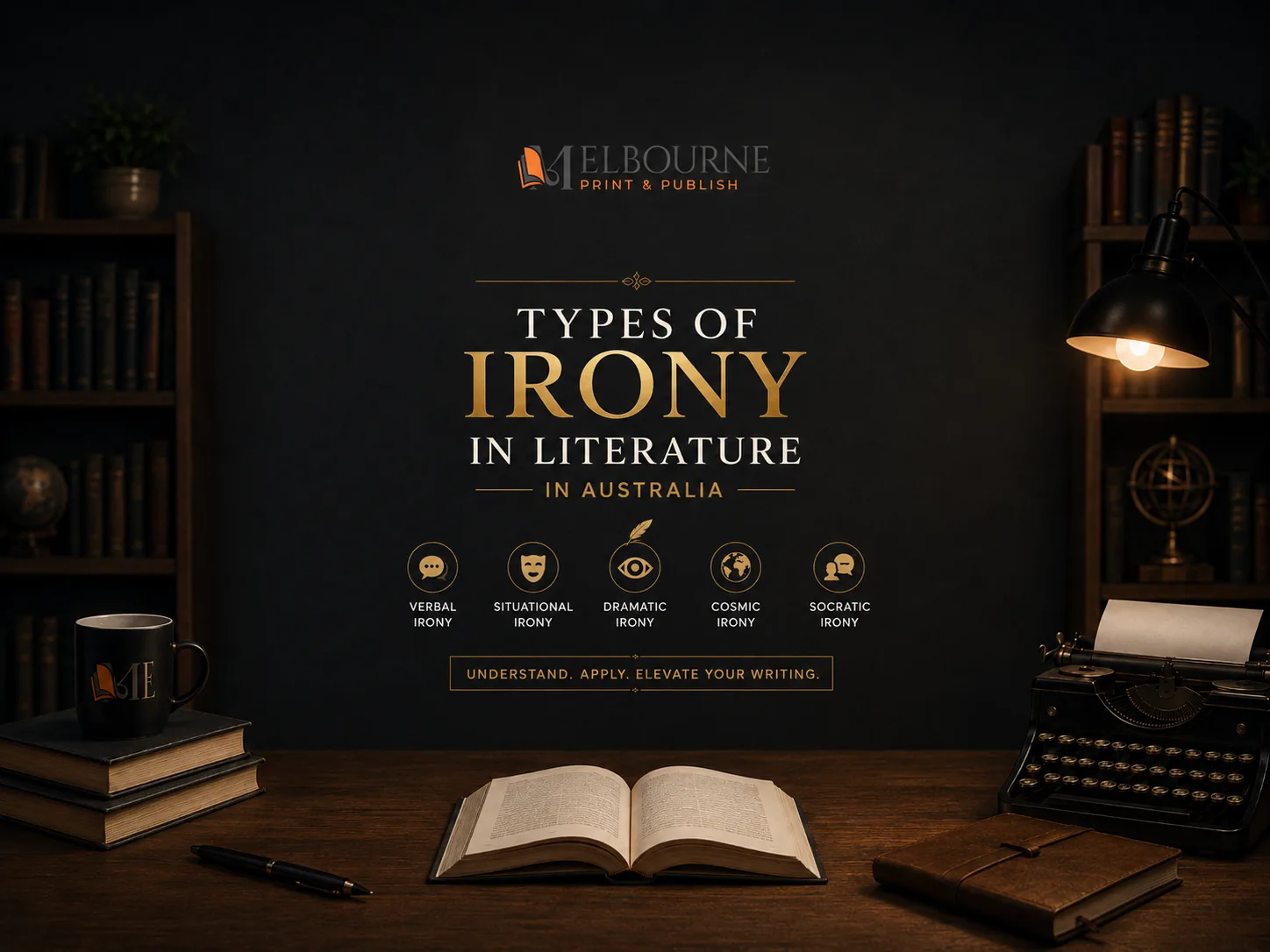
Every writer has sat in a workshop and heard someone say "that's so ironic" about something that isn't ironic at all. Rain on a wedding day. A traffic jam when you're already late. Alanis Morissette built a whole song out of the confusion, and three decades later writers are still borrowing her mistake. That's not irony. That's just bad luck with better PR.
You've built a protagonist with a clear goal. You've built an antagonist who wants to stop them. So why does the conflict still feel flat, the hero passive,