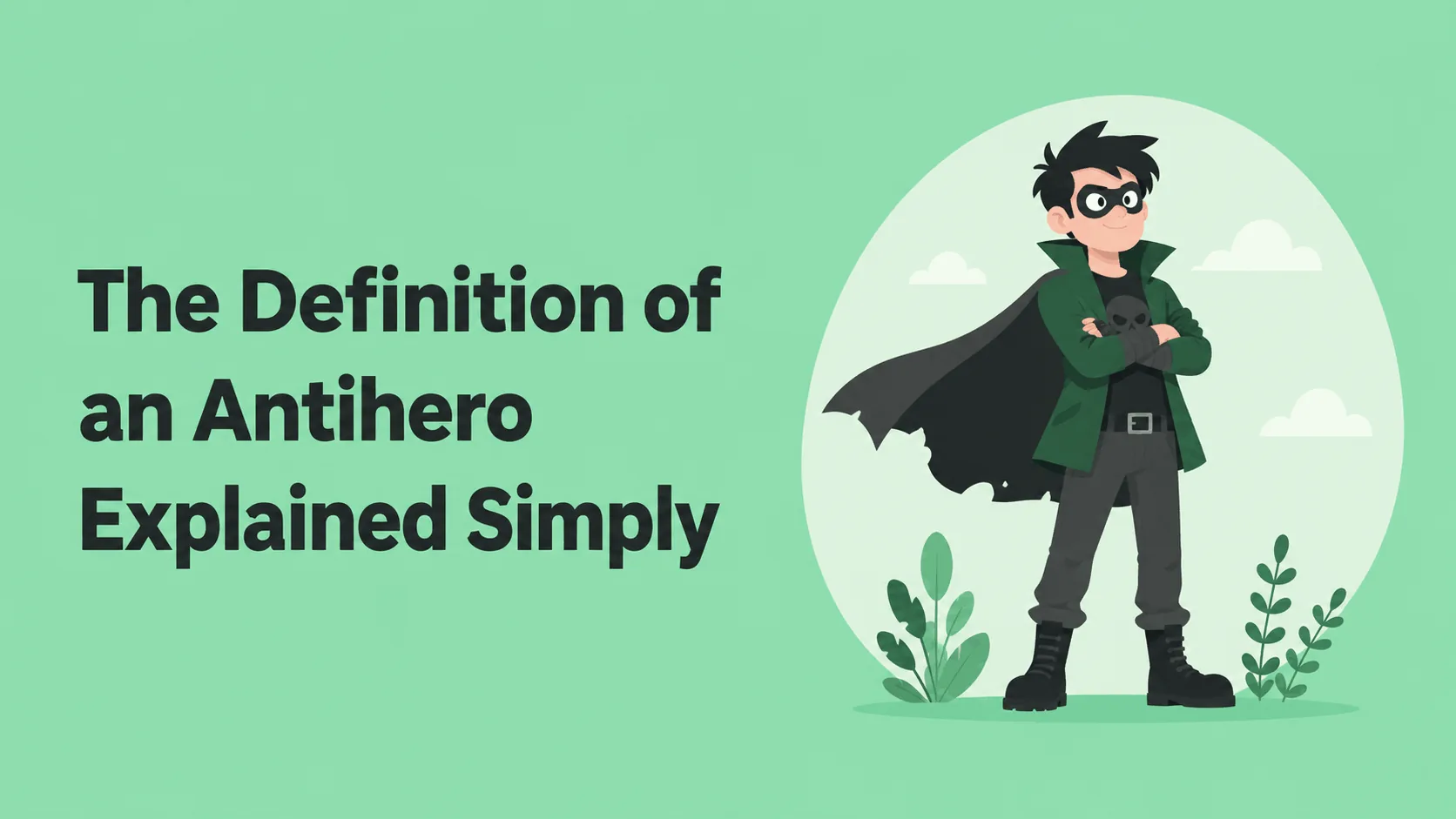
There's a character type that keeps showing up everywhere, in the books readers won't put down, in the TV series people binge in a single weekend, in the films that stay with you long after the credits roll. They're not the knight in shining armour. They're not the monster hiding in the dark. They exist somewhere in between, morally messy, deeply human, and somehow impossible to look away from.
And if you've ever found yourself rooting for a character who has done something genuinely terrible, or felt weirdly invested in someone who probably doesn't deserve your empathy, you already understand the pull of the antihero, even if you've never stopped to name it.
The problem is that "antihero" gets thrown around loosely. It's used to describe characters who are simply a bit rude, or vaguely flawed, or just not particularly cheerful. That's not what an antihero is. The antihero is a specific, layered archetype with its own rules, its own psychology, and its own reason for existing in a story. Understanding what actually defines one, and what separates them from a flawed hero on one end and a villain on the other, is the difference between recognising this character when you see them and truly understanding what they're doing in the narrative.
This guide goes deep. Whether you're a reader trying to make sense of your favourite morally grey protagonist, a writer attempting to build one from scratch, or someone who simply finds these characters fascinating and wants to understand why, you're in the right place. We're covering everything from the antihero meaning and core characteristics, to iconic examples across literature, film, and television, to the historical context that gave rise to the archetype, to a practical guide for writers who want to build one that actually works.
The antihero definition, in its simplest form, is a protagonist who lacks the conventional qualities of a hero. They don't have a pure moral code. They don't act selflessly. They don't always do the right thing, and when they do, it's often for the wrong reasons, or through methods that are difficult to defend.
That's what the antihero meaning actually points to. The prefix "anti" here doesn't mean enemy. It means against, or opposite. The antihero isn't opposed to heroes in the sense of being their nemesis. They're opposed to the idea of the hero as an ideal. They represent something deliberately contrary to the polished, virtuous, morally uncomplicated protagonist that traditional storytelling tends to celebrate.
What makes the antihero compelling isn't their wrongdoing. It's the complexity that surrounds it. An antihero has reasons. They have a history. They have a code, even if that code looks twisted from the outside. They experience internal conflict. They might do something genuinely good in one scene and something deeply questionable in the next, and both actions feel true to who they are.
The antihero definition, properly understood, is not just "a bad person who's the main character." It's a protagonist who operates in moral grey areas, whose motivations are understandable even when their actions aren't admirable, and who forces the audience to engage with uncomfortable questions about right and wrong, justice and revenge, survival and sacrifice.
The antihero meaning sits squarely in that discomfort. The character is designed to make you feel something complicated.
Understanding what an antihero is requires understanding what they look like in practice. Several characteristics tend to show up consistently across different types of antiheroes, across different media, and across different historical periods.
Moral ambiguity sits at the centre of all of them. An antihero doesn't operate from a clear ethical framework that aligns with what society would consider "good." They might follow their own code, but that code doesn't necessarily line up with conventional morality. They live in shades of grey, and the story doesn't attempt to resolve that greyness into something cleaner or more comfortable.
Self-interest is a powerful driver. Where a traditional hero acts out of a desire to protect others, an antihero is often motivated by something far more personal. Revenge. Survival. Money. A private sense of justice that has nothing to do with the greater good. Even when their actions accidentally benefit other people, the motivation underneath is rarely altruistic.
Flawed humanity is what makes them feel real. Antiheroes carry psychological scars, personal failures, addictions, trauma, arrogance, or some combination of all of the above. These aren't decorative flaws added to make the character seem interesting. They're the source of the character's behaviour. The flaw and the action are inseparable.
Unconventional methods are almost always part of the picture. An antihero will do things a traditional hero wouldn't. They'll lie, manipulate, use violence beyond what's strictly necessary, break the rules, cross the lines. They don't believe the ends always justify the means in a philosophical sense, but in practice, they tend to act that way.
Internal conflict separates the antihero from the villain more than anything else. A true antihero isn't comfortable with who they are. There are glimpses of something better underneath, moments of unexpected kindness, loyalty, or conscience that remind you the character isn't simply evil. That tension, between what they do and what they might be capable of if things had gone differently, is part of what makes them so watchable.
Defiance of authority or societal norms rounds out the picture. Antiheroes tend not to trust institutions, governments, or the people who claim to represent order. That distrust might be rooted in experience, or it might just be baked into their personality. Either way, they operate outside the system, often because the system has failed them, or because they've concluded it was never worth following in the first place.
One of the most common misconceptions about antiheroes is that they're just villains who happen to be the main character. They're not. And they're not simply "dark heroes" either, people who do heroic things in grim ways. The distinctions matter.
A traditional hero has a moral code that aligns with what we'd broadly consider "good." They prioritise others. They're motivated by justice, protection, or a higher principle. When they use violence, it's proportional and defensible. Their internal struggle is usually with external forces, not with their own nature. The audience admires them, maybe even aspires to be like them.
An antihero is motivated primarily by self-interest, even when their actions coincidentally serve others. Their methods are often ethically questionable. Their goals are personal. They experience constant internal conflict because their darker impulses and their occasional better instincts pull in opposite directions. The audience doesn't admire them in a simple way. They fascinate, unsettle, and stir up complex feelings simultaneously.
A villain, by contrast, is usually pursuing harm or chaos as an end in itself, or is motivated by ideology or desire in a way that acknowledges no ethical framework at all. There's little internal conflict because they've already resolved the moral question in the worst possible direction. The audience fears or despises them, rather than empathising.
The space between an antihero and what's sometimes called an "antivillain" is where things get particularly interesting. An antivillain has goals or methods that align with villainy, but might have understandable motivations or even some sympathetic qualities. An antihero is structurally a protagonist, the character we follow, the person whose perspective we inhabit, even when their actions don't deserve sympathy.
| Aspect | Hero | Antihero | Villain |
|---|---|---|---|
| Definition | A morally good protagonist | A protagonist with flawed morals | A character who causes harm or conflict |
| Motivation | Justice, protection, sacrifice | Revenge, survival, self-interest | Power, destruction, control |
| Moral Code | Strong and clear | Morally grey | Usually unethical |
| Methods | Honest and ethical | Uses questionable methods | Uses harmful or cruel methods |
| Personality | Brave, noble, inspiring | Complex, flawed, conflicted | Manipulative or ruthless |
| Audience Reaction | Admiration | Sympathy mixed with discomfort | Fear or dislike |
| Internal Conflict | Less focused on inner darkness | Strong internal struggle | Rarely feels guilt |
| Relationship with Society | Supports rules and order | Often rejects rules | Often fights against society |
| Example Traits | Selfless, loyal, heroic | Cynical, damaged, rebellious | Evil, selfish, destructive |
| Purpose in Story | Represents ideal goodness | Explores moral complexity | Creates opposition and danger |
Antihero isn't a single mould. The category is broad enough to contain characters who look quite different from each other on the surface. Understanding the different types helps both analysts and writers get a more precise handle on what kind of antihero they're dealing with, or building.
The pragmatic antihero achieves outcomes that could be considered good, but through methods that are ruthless or morally compromising. Vigilante characters often fall here. They want justice, but they're willing to go well beyond the law to get it. Their ends might look defensible. Their means often don't.
The cynical antihero is disillusioned, sarcastic, and deeply sceptical of authority, idealism, and institutions. They've been burned, or they've simply watched the world long enough to stop believing in its stated values. Hard-boiled detectives from noir fiction often fit this mould. They'll do the job, but they're not going to pretend it means anything.
The dark antihero carries something genuinely troubling inside them, a violent history, a destructive impulse, something that goes beyond simple cynicism into something darker. And yet they're capable of protecting others, of forming attachments, of occasionally acting in ways that show they haven't completely lost whatever it is that makes them recognisably human.
The tragic antihero is perhaps the most classically literary of the types. Their flaws are the engine of their downfall. The audience watches, often with a sense of inevitability, as the character's own nature destroys them. There's pity involved, not just horror. You understand how they got here, even as you watch them arrive somewhere terrible.
The unbound antihero operates entirely outside conventional morality. They follow their own code, or simple hedonism, and don't particularly care what anyone else thinks of that. Occasionally their self-serving actions produce outcomes that benefit others, but that's coincidental rather than intentional.
Within all these types, there's the question of whether a particular antihero is redeemable or irredeemable. Some antiheroes have a genuine arc toward something better, even if they don't fully arrive there. Others are heading in the opposite direction, moving further from any kind of redemption as the story unfolds. Both are valid. Both serve different thematic purposes.
The popularity of antiheroes isn't accidental, and it isn't just a symptom of audiences becoming more cynical. There are genuine psychological and narrative reasons why these characters resonate so strongly.
Relatability is a big part of it. A perfectly virtuous hero is aspirational, but not particularly relatable. Most people don't see themselves in a character who always makes the right choice, acts with perfect courage, and never compromises their values. An antihero, though? Most of us have felt self-interested when we should have been generous. Most of us have made a choice we couldn't entirely defend. Most of us have carried something that makes us feel like we don't quite deserve the title of "good person." An antihero doesn't make us feel judged for that. They make us feel understood.
Moral engagement is another factor. A story with a morally uncomplicated hero asks you to cheer. A story with an antihero asks you to think. Should you be sympathising with this person? Is what they're doing justifiable given their circumstances? Is there a point at which you stop rooting for them, and have you reached it yet? These are uncomfortable questions, and discomfort is, paradoxically, one of the most engaging things a story can produce.
The challenge to narrative expectations matters too. When audiences have been trained to expect heroes to look and act a certain way, a character who deliberately subverts those expectations creates tension and interest simply by existing. The antihero signals that this isn't a simple story, and that tends to attract readers and viewers who want something more complex than the straightforward alternative.
The antihero also functions, at their best, as what you might call a mirror to societal discontent. Walter White isn't just an interesting individual. He's a portrait of what happens to a man who has internalised certain ideas about masculinity, success, and recognition, and then finds those ideas exposed as hollow. Don Draper isn't just a charming liar. He's a study in the costs of the mid-century American dream, its promises and its violence. The antihero tends to appear in particular cultural moments because they give voice to anxieties that polite narratives don't know how to address.
If you're working on a project where these themes are central and you're figuring out how the narrative will hold together, it's worth thinking carefully about structure from the ground up. Melbourne Print and Publish's professional editing services can help writers develop that structural thinking before it becomes a problem to fix.
The best way to understand what an antihero looks like in practice is to look at the characters who have defined the archetype.
Jay Gatsby, from F. Scott Fitzgerald's The Great Gatsby, is one of literature's most enduring antiheroes. He's charming, mysterious, and deeply sympathetic in his longing. He's also built his entire life on lies, made his fortune through criminal enterprise, and is pursuing an idealised version of a person rather than an actual human being. Gatsby is a tragic antihero: his flaws are not incidental but structural, and they destroy him.
Raskolnikov, from Dostoevsky's Crime and Punishment, is a more unsettling example. He commits murder based on a philosophical theory about who has the right to transcend conventional morality, and then spends the novel being dismantled by his own conscience. He's a dark antihero who is also, in some ways, a tragic one. His intelligence is the source of both his crime and his suffering.
Travis Bickle in Taxi Driver is one of cinema's most discussed antiheroes — a Vietnam veteran, isolated and disturbed, who decides to become a self-appointed force of violent cleansing in New York City. His actions, which the film presents through his own distorted perspective, are genuinely troubling, and yet the narrative doesn't entirely condemn him. That ambiguity is deliberate and deeply uncomfortable.
Walter White in Breaking Bad is possibly the defining antihero of prestige television's golden age. The series is essentially a case study in antihero construction: we start with enormous sympathy for him, watch as he makes choice after choice that moves him further from the person we initially met, and by the finale, we're forced to confront how thoroughly we were manipulated into rooting for someone who, by any objective measure, became a genuinely terrible person.
Dexter Morgan in Dexter takes a different approach. He's a blood-spatter analyst who is also a serial killer, operating according to a code that restricts him to killing other killers. He's an unbound antihero with a twisted ethical framework that the audience is invited to find, somehow, almost reassuring. The code gives him shape, and the character works because of that internal structure, even if the structure itself is monstrous.
In the world of video games, Kratos from God of War is worth mentioning. He's a character driven by rage and personal vengeance who causes enormous destruction across his arc, but who is also, in the later instalments of the series, a figure grappling seriously with the consequences of who he has been. And Rorschach in Watchmen, one of the most discussed antiheroes in graphic novels, is an unbound antihero taken to a chilling extreme: his code is internally consistent and absolutely rigid, and the story asks whether internal consistency alone is enough to make a code moral.
If you're working on fiction that involves characters like these, with complex motivations and layered moral positioning, Melbourne Print and Publish's fiction ghostwriting services can provide support in bringing that complexity to the page in a way that actually works.
There's a lot of muddled thinking around antiheroes, and it tends to produce either characters that don't work, or misreadings of characters that do. Let's clear some of it up.
Myth 1: All antiheroes are purely bad or evil. This is the most persistent misconception. An antihero who is simply evil isn't an antihero. They're a villain who happens to be the protagonist. The defining feature of an antihero is moral complexity, the capacity for both bad and unexpectedly good, the internal conflict between darker impulses and something more humane. Remove that complexity and you don't have an antihero anymore.
Myth 2: An antihero always has a redemption arc. Some do. Many don't. Redemption is a narrative possibility, not a structural requirement. Some of the most celebrated antiheroes end in tragedy, or in a kind of moral stasis, or in further deterioration. What matters is that the arc is honest to the character, not that it ends in a particular place.
Myth 3: Antiheroes are just dark heroes. A dark hero uses grim or violent methods in service of goals that are genuinely altruistic. They might be troubled, but their fundamental orientation is toward the good of others. An antihero's fundamental orientation is toward themselves. The distinction is about motivation, not method.
Myth 4: Antiheroes must be unlikeable. Some of the most effective antiheroes are incredibly charismatic, charming, and likeable. That's often part of how they work. Walter White is initially sympathetic precisely because he's likeable. Tony Soprano is magnetic. Likeability and moral ambiguity aren't opposites. In fact, the combination is one of the antihero's most powerful tools.
Myth 5: Any character with flaws is an antihero. Flaws make a character human, not anti-heroic. A traditional hero can have significant flaws and still be operating from a fundamentally good-faith, other-oriented moral framework. The flaws that define an antihero are specifically the kind that produce morally questionable behaviour, not just personal struggles.
Building an antihero who actually works requires more than deciding your protagonist is going to be "morally grey." It requires careful, deliberate construction from the inside out.
Step 1: Define their code. Even if it's twisted, your antihero needs a set of principles they won't violate. These might look strange or even reprehensible from the outside, but they need to be internally consistent. The code is what gives the character structure and makes their behaviour legible. Without it, they're just unpredictable, and unpredictable isn't the same as complex.
Step 2: Unearth their motivation. What is driving this character at the deepest level? Revenge for something specific? A desire for control that came from powerlessness? A warped sense of justice rooted in genuine experience of injustice? The motivation needs to be something an audience can understand, even if they don't endorse it. If you can't articulate the motivation clearly, neither can the character.
Step 3: Show the flaws and the virtues, don't just tell them. Let the audience discover who this character is through what they do, how they react, the choices they make under pressure. An antihero who is described as dangerous but never shown being dangerous isn't convincing. Equally, an antihero who is described as capable of loyalty but never shown demonstrating it isn't three-dimensional.
Step 4: Design their internal conflict. The most compelling antiheroes are torn. There's something in them that knows, on some level, who they are and what they're doing. That knowledge might manifest as guilt, or it might manifest as anger, or as a compulsive need to justify themselves to others. Whatever form it takes, the internal conflict is what makes the character feel real rather than constructed.
Step 5: Map their arc. Are they moving toward something, away from something, or circling? Will they grow, deteriorate, or stay essentially unchanged? Each of these produces a different kind of story. The arc doesn't need to lead to redemption, but it needs to go somewhere with intention. Antiheroes who change nothing and learn nothing tend to leave audiences feeling empty rather than moved.
Step 6: Contextualise their world. An antihero doesn't exist in a vacuum. The historical, social, and cultural context they inhabit shapes who they are and why. A character operating in a genuinely unjust system reads very differently from one operating in a basically functional society who has simply decided the rules don't apply to them. Context changes the moral weight of everything.
If you're developing fiction with this level of character complexity and want support at the structural level, Melbourne Print and Publish's ghostwriting services can help ensure the character and story architecture hold together.
Here's a guided exercise for writers working on an antihero character. Work through each prompt before you start drafting.
Name and archetype: Who is this character, and which type of antihero do they most resemble? Cynical investigator, tragic vigilante, pragmatic outsider?
Core motivation: What are they actually after? Not the surface goal, but the thing underneath it. What experience or belief drives every decision they make?
Their twisted code: What will they never do, even when it would serve their interests? What line exists for them, even if it's a strange one?
Defining flaws: What specific weaknesses produce the most consequential bad behaviour? Arrogance, addiction, paranoia, ruthlessness?
Glimmer of virtue: Where does something unexpected and better show up? Loyalty to one specific person? Instinctive protection of someone vulnerable? A private ethical line they won't cross?
Key internal conflict: What two things in this character are fundamentally at war? The desire for justice versus the methods of violence? Self-preservation versus love? Ambition versus conscience?
Working through these questions before you begin writing produces a character who feels found rather than invented.
The antihero isn't a modern invention. The archetype has been part of storytelling for centuries, but what it looks like and what it's responding to has shifted significantly across different eras.
In classical and romantic literature, figures like Prometheus and Milton's Satan in Paradise Lost represent early versions of the type: characters who defy divine or societal authority and are punished for it, but who carry a kind of grandeur in their defiance. The Byronic hero of the early 19th century, brooding, rebellious, morally ambiguous, is another precursor. These characters were responses to a cultural moment in which idealism was being tested by political upheaval and the failures of revolution.
The 20th century brought a harder, more existential version of the antihero. Camus's Meursault in The Stranger is perhaps the most extreme example: a character who operates almost entirely outside emotional and social norms, whose famous indifference is a direct challenge to the idea that meaningful engagement with the world is either possible or necessary. The hard-boiled detective of noir fiction, Philip Marlowe being the archetype, brought a more streetwise cynicism, a character who understands how corrupt the world is and operates within it without pretending otherwise.
The counterculture movements of the mid-to-late 20th century produced antiheroes who were explicitly anti-establishment. Characters like McMurphy in One Flew Over the Cuckoo's Nest and Harry Callahan in Dirty Harry reflected a deep distrust of institutions and authority that resonated with audiences who shared that distrust.
The 21st century, particularly what critics have called the golden age of prestige television, gave the antihero their most elaborate and sustained treatment. Characters like Tony Soprano, Don Draper, and Walter White benefited from the long-form format of serialised television, which allowed their complexity to develop over dozens of hours. The audience had time to become genuinely attached before being forced to reckon with what they'd become attached to.
If you're researching the evolution of character archetypes for a writing or academic project and want support at the editorial stage, Melbourne Print and Publish's book proofreading services and academic proofreading services can ensure your work is polished and precise.
Understanding the omniscient point of view is also useful here, because some of the most interesting questions around antiheroes involve narrative perspective: how much do we know about what they're thinking, and how does that shape our sympathy?
The antihero has endured not because audiences have become more cynical or because storytelling has lowered its standards, but because the archetype does something that simpler character types can't. It holds complexity without resolving it. It lets people engage with moral questions without demanding easy answers. It reflects the parts of human nature that are genuinely difficult, and it refuses to look away from them.
In contemporary storytelling, antiheroes continue to dominate precisely because the anxieties they reflect, about justice systems that fail, about the gap between institutional promises and institutional realities, about what happens to people who are left behind by the structures meant to support them, haven't gone anywhere. If anything, they've intensified.
The antihero will keep evolving. As the cultures that produce stories change, the particular shape of the antihero will change with them. But the core of what makes the archetype work, the moral complexity, the internal conflict, the demand that audiences engage rather than simply admire, will stay constant, because that's what it's always been.
If the character work you're doing has led you to a manuscript you're ready to take further, Melbourne Print and Publish offers end-to-end support, from book design and book formatting to marketing and publishing. Whether you're self-publishing for the first time or you've been through the process before, having experienced support at each stage makes a real difference to the final product.
You might also find it helpful to read about how to self-publish a book in Australia and how to copyright a book in Australia if you're at the early stages of bringing your manuscript to market.
An antihero is a protagonist who lacks the conventional qualities of a traditional hero. They operate in moral grey areas, are often motivated by self-interest rather than altruism, and use methods that are ethically questionable. They're complex, internally conflicted characters who sit somewhere between the idealised hero and the outright villain.
In literature, the antihero meaning refers to a central character who subverts the expectations of the traditional hero archetype. Rather than embodying virtues like selflessness, moral clarity, and noble purpose, a literary antihero is defined by moral ambiguity, personal motivation, and a flawed, often troubled humanity that makes them compelling precisely because they're not straightforwardly admirable.
A traditional hero acts from a clear moral code oriented toward the good of others. An antihero acts primarily from self-interest, uses questionable methods, and experiences significant internal conflict. The hero inspires admiration. The antihero inspires something more complicated: fascination, unease, sympathy, and sometimes discomfort with your own sympathy.
They can do good things, and they can have genuine moments of virtue, but the antihero definition generally implies someone who doesn't consistently act in ways that would qualify them as "good" in any conventional sense. Their goodness, when it appears, tends to be situational, personal, or accidental rather than principled.
The main antihero characteristics include moral ambiguity, self-interested motivation, significant personal flaws, willingness to use unconventional or questionable methods, internal conflict between darker impulses and glimpses of virtue, and a tendency to operate outside societal norms or authority structures.
Some of the most discussed antihero examples include Walter White from Breaking Bad, Don Draper from Mad Men, Dexter Morgan from Dexter, Jay Gatsby from The Great Gatsby, Raskolnikov from Crime and Punishment, Travis Bickle from Taxi Driver, and Rorschach from Watchmen. Each embodies different aspects of the archetype.
No. A villain is typically motivated by malice, chaos, or ideological extremism and has little to no meaningful internal conflict about their actions. An antihero is a protagonist, the character the audience follows and, to some degree, identifies with. Their moral complexity and internal conflict are what distinguish them from a villain.
Antiheroes resonate because they're relatable in ways that perfect heroes aren't. They reflect real moral complexity, challenge audiences to think critically rather than simply cheer, and tend to function as mirrors for broader cultural anxieties. Audiences who live in complicated, imperfect worlds find more truth in complicated, imperfect characters.
An antihero protagonist is simply an antihero who serves as the main character of the story. The narrative follows their perspective, and the audience experiences events through their viewpoint. This positioning creates intimacy and sympathy that would be impossible if the character were simply observed from the outside.
Look for a protagonist whose motivation is primarily self-interested, whose methods are ethically questionable, who experiences genuine internal conflict, and whose moral framework doesn't align cleanly with conventional ideas of "good." If the character is morally complex, internally divided, and positioned as the person we're meant to follow and engage with, you're looking at an antihero.
An antihero is a protagonist who lacks the conventional qualities of a traditional hero. They operate in moral grey areas, are often motivated by self-interest rather than altruism, and use methods that are ethically questionable. They're complex, internally conflicted characters who sit somewhere between the idealised hero and the outright villain.
In literature, the antihero meaning refers to a central character who subverts the expectations of the traditional hero archetype. Rather than embodying virtues like selflessness, moral clarity, and noble purpose, a literary antihero is defined by moral ambiguity, personal motivation, and a flawed, often troubled humanity that makes them compelling precisely because they're not straightforwardly admirable.
A traditional hero acts from a clear moral code oriented toward the good of others. An antihero acts primarily from self-interest, uses questionable methods, and experiences significant internal conflict. The hero inspires admiration. The antihero inspires something more complicated: fascination, unease, sympathy, and sometimes discomfort with your own sympathy.
They can do good things, and they can have genuine moments of virtue, but the antihero definition generally implies someone who doesn't consistently act in ways that would qualify them as "good" in any conventional sense. Their goodness, when it appears, tends to be situational, personal, or accidental rather than principled.
The main antihero characteristics include moral ambiguity, self-interested motivation, significant personal flaws, willingness to use unconventional or questionable methods, internal conflict between darker impulses and glimpses of virtue, and a tendency to operate outside societal norms or authority structures.
Some of the most discussed antihero examples include Walter White from Breaking Bad, Don Draper from Mad Men, Dexter Morgan from Dexter, Jay Gatsby from The Great Gatsby, Raskolnikov from Crime and Punishment, Travis Bickle from Taxi Driver, and Rorschach from Watchmen. Each embodies different aspects of the archetype.
No. A villain is typically motivated by malice, chaos, or ideological extremism and has little to no meaningful internal conflict about their actions. An antihero is a protagonist, the character the audience follows and, to some degree, identifies with. Their moral complexity and internal conflict are what distinguish them from a villain.
Antiheroes resonate because they're relatable in ways that perfect heroes aren't. They reflect real moral complexity, challenge audiences to think critically rather than simply cheer, and tend to function as mirrors for broader cultural anxieties. Audiences who live in complicated, imperfect worlds find more truth in complicated, imperfect characters.
An antihero protagonist is simply an antihero who serves as the main character of the story. The narrative follows their perspective, and the audience experiences events through their viewpoint. This positioning creates intimacy and sympathy that would be impossible if the character were simply observed from the outside.
Look for a protagonist whose motivation is primarily self-interested, whose methods are ethically questionable, who experiences genuine internal conflict, and whose moral framework doesn't align cleanly with conventional ideas of "good." If the character is morally complex, internally divided, and positioned as the person we're meant to follow and engage with, you're looking at an antihero.


Learn the difference between your, you're, their, they're, and there with simple tips that help you avoid common grammar mistakes in everyday writing.

Understand tone in writing, from formal and playful to serious and sarcastic, and learn how the right tone can shape your reader’s response.
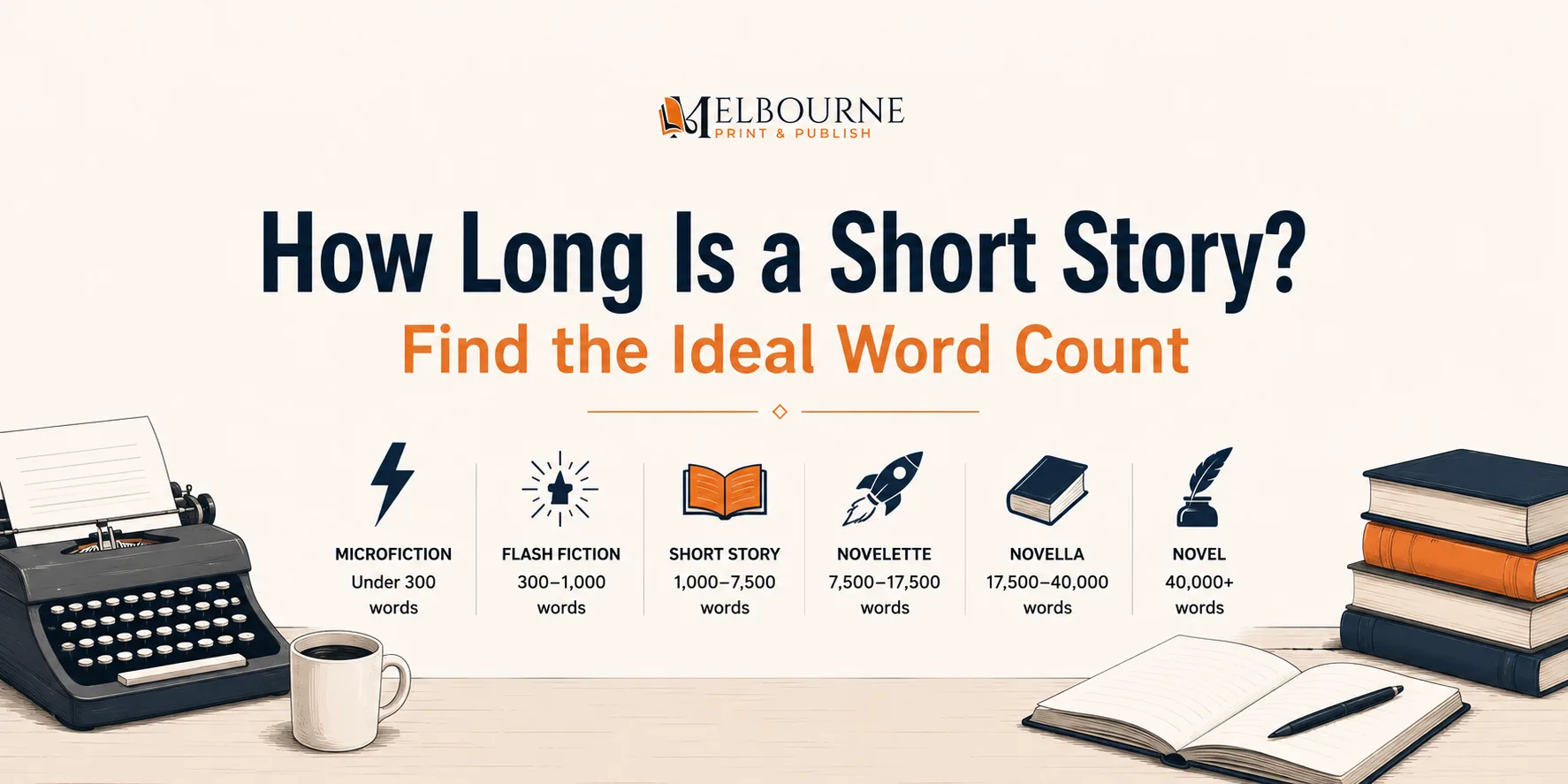
Not sure how many words your story needs? Learn the ideal length for flash fiction, short stories, novelettes, and novellas before sending it to a publisher.
Explore the 12 character archetypes, from Heroes and Rebels to Sages and Rulers. Discover their traits, motivations, flaws and how to make them memorable.